

Trail Running Gear NZ

Trail Running Gear NZ: The Complete Guide to 2026
I've been running for more than 25 years. Like plenty of Kiwi kids, running originally wasn't really the sport. It was the thing I did to get better at every other sport. Rugby in the winter. Cricket in the summer. Golf. Tennis. Squash. Whatever I could get my hands on. Somewhere along the way running became considerably more serious. I competed nationally in cross-country, competed at the Stanford Invitational in the United States and spent years where a 10km run was simply another training session. Today, the relationship is a little different. I'm a dad. I own a business. Life is considerably busier and, if I'm honest, running has become my out. I still run around five times a week and I'll probably always consider myself a runner before anything else. It gives me a base physically, but perhaps more importantly these days, mentally. And I've slowly moved away from the pavement. Maybe I'm getting soft. Maybe running next to cars for hours eventually loses its appeal. Either way, give me clean air, trees, gravel, some mud and considerably fewer people and I'm happy.
Riverhead is my local playground. The trails around Auckland's west are basically sitting outside the door of our head office. But give me the Central Plateau, Queenstown Lakes or somewhere around the coast near Te Arai and Mangawhai and I'm properly in my element. I love running quickly. I love the challenge. I particularly love gravel. There is something about the sound of fresh shoes moving a little stone underneath them that just does it for me. But this article isn't really about my running. It is about the gear. Because while I have spent more than 25 years using this stuff, I have also spent more than two decades on the other side of the counter selling it. Wholesale. Retail. Product ranging. Supplier meetings. Testing. Talking to customers. Tens of thousands of pairs of footwear and an awful lot of jackets, packs, socks and accessories in between. Even now you will still find me on the floor at Land & Sea talking to somebody about what they should wear on their feet. So I come at trail running gear from two directions. I'm the consumer who loves new product and probably gets more excited about technical gear than a grown man should.
And I'm the retailer who has watched thousands of customers spend money on things they either absolutely needed or probably didn't. That distinction matters. Because trail running has exploded and with that explosion has come an unbelievable amount of gear. Shoes. Vests. Poles. Flasks. Jackets. Socks. Headlamps. Base layers. GPS watches. Nutrition. Emergency equipment. Some of it is genuinely brilliant. Some of it solves problems you didn't realise you had. And some of it can turn the relatively simple act of going for a run into something that looks like you are preparing to summit Everest. My philosophy is pretty straightforward. Quality over quantity. Buy the best equipment you can reasonably afford, understand what problem it is solving and then forget about it when you run. Great gear should make trail running simpler. Not more complicated. So, what trail running gear do you actually need? Let's get into it.
What Trail Running Gear Do You Actually Need?
This is probably the most important question in the entire guide. And unfortunately the answer is: It depends. Sorry. A 45-minute run around a familiar forest loop does not require the same equipment as four hours somewhere remote. Likewise, a trail-running race with aid stations every 10km is very different from disappearing into the backcountry by yourself. Distance matters. Weather matters. Remoteness matters. Terrain matters. Your fitness matters. And experience definitely matters. I spent years taking the opposite approach. Running gear was shoes, shorts and maybe a shirt if everyone was lucky. Hardman stuff. I don't need water. I don't need a vest. I'll be fine. Eventually competition and experience beat enough of that stupidity out of me. One of the biggest lessons I have learnt is that being prepared doesn't make you soft. It lets you perform. That is particularly relevant in New Zealand where our weather has an incredible ability to make you look like an idiot remarkably quickly. So here is my rough starting point.
| The run | Footwear | Hydration | Clothing | Weather protection | Other gear |
|---|---|---|---|---|---|
| Local run under 60-90 mins | Proper trail shoes | Depends on heat & access to water | Technical shorts, top, good socks | Lightweight layer if weather requires it | Phone, sunglasses/headlamp depending on time |
| 10-20km trail run | Trail shoes matched to terrain | Soft flask or hydration vest becomes increasingly useful | Technical running kit | Packable wind/rain layer depending on forecast | Phone, nutrition if required, sunglasses/headlamp |
| 2-4 hour run | Footwear becomes critical | Hydration vest strongly starts earning its place | Proper anti-chafe kit | Packable technical shell | Water, nutrition, phone, lighting if needed |
| Long / remote day | Proven shoes, never experiment here | Carry enough capacity for the route | Layering becomes much more important | Proper weather protection | Navigation, communications, food, light, safety equipment appropriate to the terrain |
| Ultra / event | Race-tested footwear | Capacity matched to aid stations & mandatory gear | Tested race kit | Whatever the event requires plus conditions demand | Mandatory gear, nutrition strategy, poles where appropriate |
I deliberately haven't put some formula in there saying: 10km = 500ml of water. That is nonsense. Ten kilometres in Riverhead on a cool morning is completely different from ten kilometres somewhere exposed in 28-degree heat. This guide should help you understand the equipment. You still need to think.
Trail Running Shoes: Spend Your Money Here
I'm going to start with the easiest one. If your budget is limited, spend your money on your feet. Every time. I would happily run in an average T-shirt and excellent shoes. I would not reverse that equation. One of the biggest gear mistakes I have made over the years is wearing the wrong footwear. A jacket annoying you? You can take it off. Hat irritating you? Take it off. You cannot exactly throw your shoes into the bush halfway through a 20km trail run and keep cracking on. Your footwear is along for the entire ride. That is why buying cheaper than you can genuinely afford often ends up being false economy in this category. I'm not saying everyone needs a $500 pair of Nordas. They don't. But if trail running is genuinely your sport, buy the right shoe rather than the cheapest shoe. We have already gone ridiculously deep into this subject in our Best Trail Running Shoes NZ guide, so I'm not going to regurgitate thousands of words here. The short version is this. Grip matters. Fit matters. Stability matters. Cushioning matters. But the right combination depends on where you run.
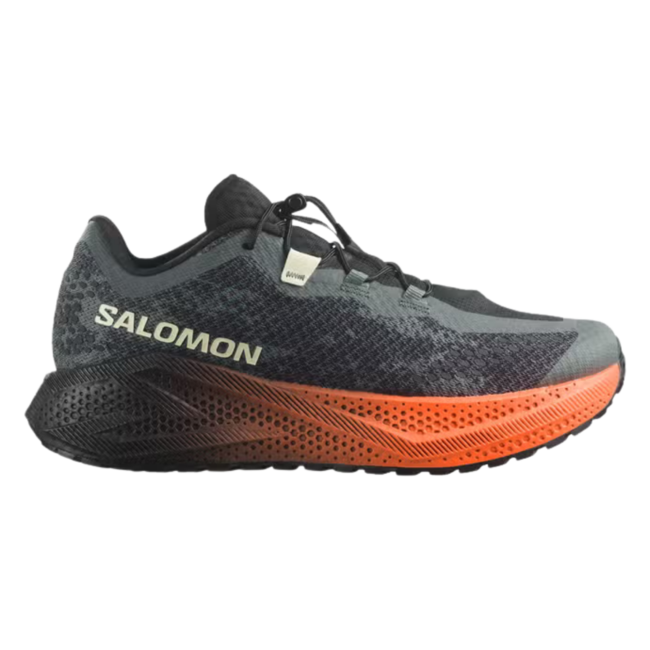
I'm currently spending quite a bit of time in Salomon's gravel-specific footwear. That makes sense for me because gravel has become a much bigger part of my running and I love footwear that allows me to move quickly across changing surfaces. Someone heading into deep winter mud needs something completely different. Someone running an ultra wants something different again. And the person doing half road, half trail certainly does not need the same outsole as somebody climbing through wet clay every weekend. Buy for your actual running. Not the runner Instagram has convinced you that you are. That is probably one of the best pieces of advice I can give you throughout this entire article.
Trail Running Socks: The Most Underrated Piece of Kit?
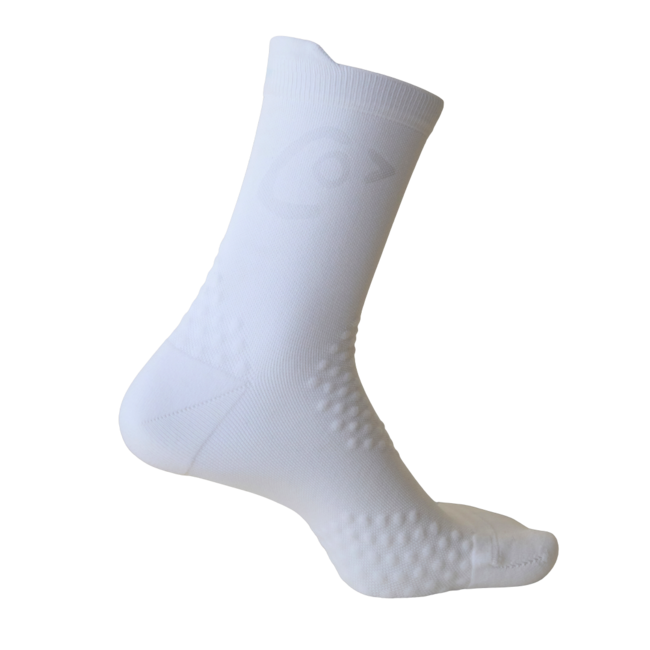
I reckon socks might be the most underestimated product in trail running. Seriously. We obsess over $350 shoes and then people put cotton socks from Farmers inside them. Come on. Your shoe can only do so much. Once your feet become wet, friction increases and you've spent another two hours rubbing the same areas over and over again, a tiny problem starts becoming a very big problem. I want my trail-running socks to do a few things properly. Manage moisture. Stay where I put them. Provide cushioning where I actually need it. Avoid seams or bunching that create pressure points. And survive being absolutely punished. One of the best running socks I have personally come across is Courier. They build products for runners and cyclists and put a surprising amount of technical thinking into something most people completely ignore. The material debate is interesting too. Merino is brilliant. But I'm not one of those people who believes every piece of outdoor clothing needs to contain wool because we live in New Zealand. Modern synthetics are ridiculously good.
For running, I care about how the sock manages heat and moisture, how quickly it dries and whether I can forget I'm wearing it. That last point is pretty much the goal with all great running equipment. If I stop thinking about it, somebody did their job properly.
Hydration Vests: The Product I Was Too Stubborn to Use
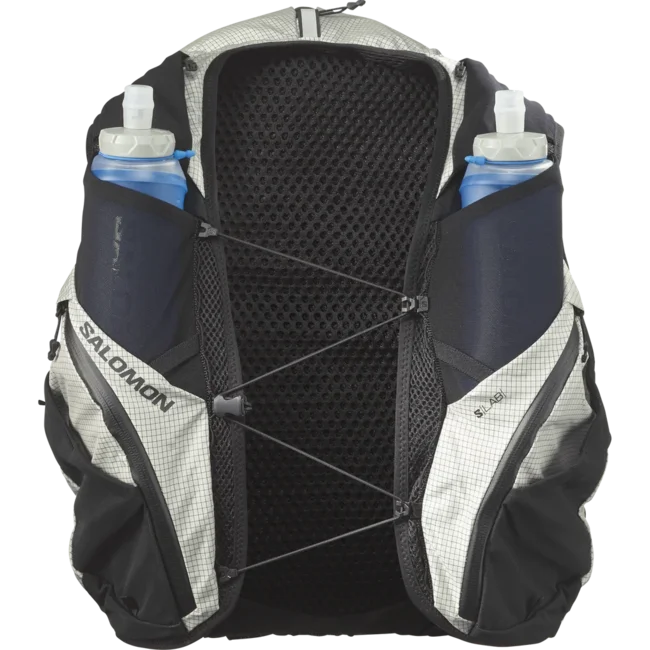
This one makes me laugh a little. For a long time, I didn't want one. Part ego. Part simplicity. Part thinking I didn't need all this stuff hanging off me. Then I actually started using a proper running vest. And once you make that transition it becomes very difficult to go backwards. There is something unbelievably convenient about carrying water, phone, jacket, nutrition and whatever else you need without having everything bouncing around in pockets. The key word there is proper. A bad running vest is horrible. If it bounces, rubs, moves around or makes you conscious of it with every step, you are going to hate the thing. For me, the priorities are incredibly simple. Comfort & storage. That is the balance. I want it secure enough that it moves with my body rather than against it. I want the stuff I use regularly sitting somewhere I can reach it without performing yoga mid-run. And I want enough storage for the job without carrying half an empty backpack around. My current setup is a Salomon S/LAB running vest, and Salomon is one brand I think understands this entire ecosystem particularly well.
Do I need 10 litres for my normal 10-15km run? Absolutely not. And that is the important bit. Don't buy capacity because more sounds better. Buy capacity because you need to carry more. A vest that is brilliant for UTMB could be ridiculous for your Tuesday morning loop.
Soft Flasks vs Bladders: Which Is Better?
I lean towards simplicity here. Soft flasks work exceptionally well because they are easy to access, easy to monitor and easy to refill. You can physically see how much water you have. That sounds stupidly obvious until you've drunk the last mouthful out of a bladder and suddenly realised there is nothing left. Bladders still make a lot of sense when you need more capacity, want the weight positioned around your back or simply prefer drinking through a hose. Neither is right. Again, match the equipment to the task. My personal hydration strategy is not particularly scientific. I drink water. A lot of it. I try to use whole food and natural fuel wherever I can and I don't obsess over complicated supplementation strategies during my normal running. My remarkably technical rule for water is: I want to finish with very little left. If I'm consistently carrying a litre home, I carried too much. If I'm consistently running dry with an hour to go, I'm an idiot. Experience eventually calibrates that equation.
The Run That Finally Taught Me to Carry Enough Water
I learnt this lesson properly outside Rotorua. A friend of mine pushed me well beyond the distance I normally run. I live pretty comfortably in that 10-15km zone because that is what gives me what I want from running. This wasn't that. We pushed through 30km. I had taken one bottle because apparently I believed optimism could be converted into water. Eventually the bottle was gone. Nutrition was low. And to complete the experience I wasn't wearing my usual 2-in-1 shorts, so chafing had decided to join the party as well. Beautiful. It wasn't some dramatic survival situation. It was just incredibly uncomfortable. But those runs teach you more than the easy ones. The lesson wasn't suddenly: Carry everything. The lesson was: Match your gear to the adventure. That sounds unbelievably simple. Yet I see customers make the same mistake every week. They either prepare for a 10km run like they are crossing Antarctica or head into a long remote mission carrying what they normally take around the block. Neither makes sense.
Nutrition for Trail Running
I'm probably not the guy who is going to provide you with the world's most complicated trail-running nutrition programme. That isn't how I operate. Preparation before the run matters enormously to me. If I know I'm heading long, I would rather start fuelled properly than spend the next four hours trying to rescue the situation. On my normal running, I don't carry much. As distance increases, gels become an incredibly efficient option because they are light, simple and easy to carry. For genuine endurance events, nutrition becomes a completely different subject and runners should build a strategy they have actually tested before race day. What I would not do is spend $300 on a vest, load it with fifteen gels and then discover two hours into your first ultra that your stomach hates every one of them. Test things. Trail running is full of small learnings. Your body is part of the equipment equation too.
Trail Running Jackets: This Is Where I Get Excited
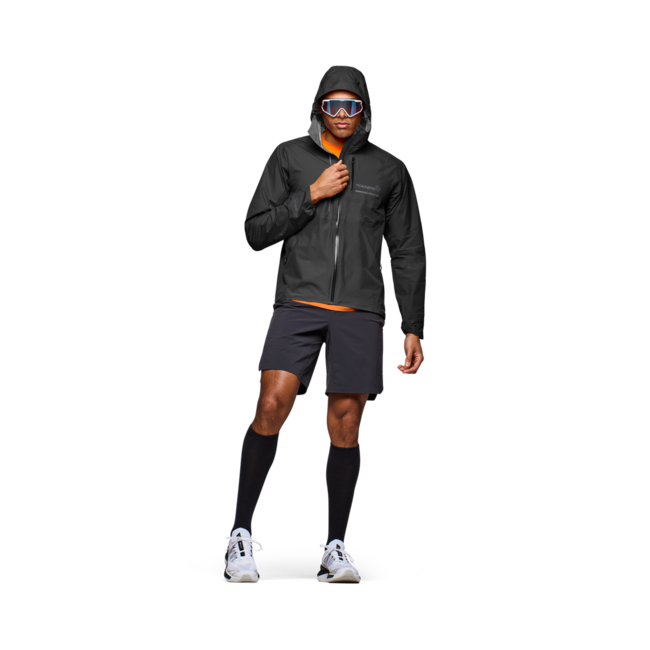
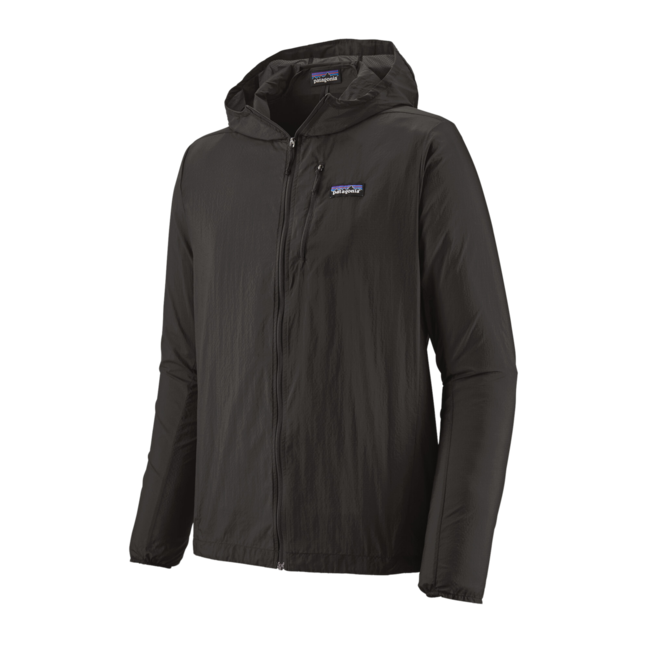
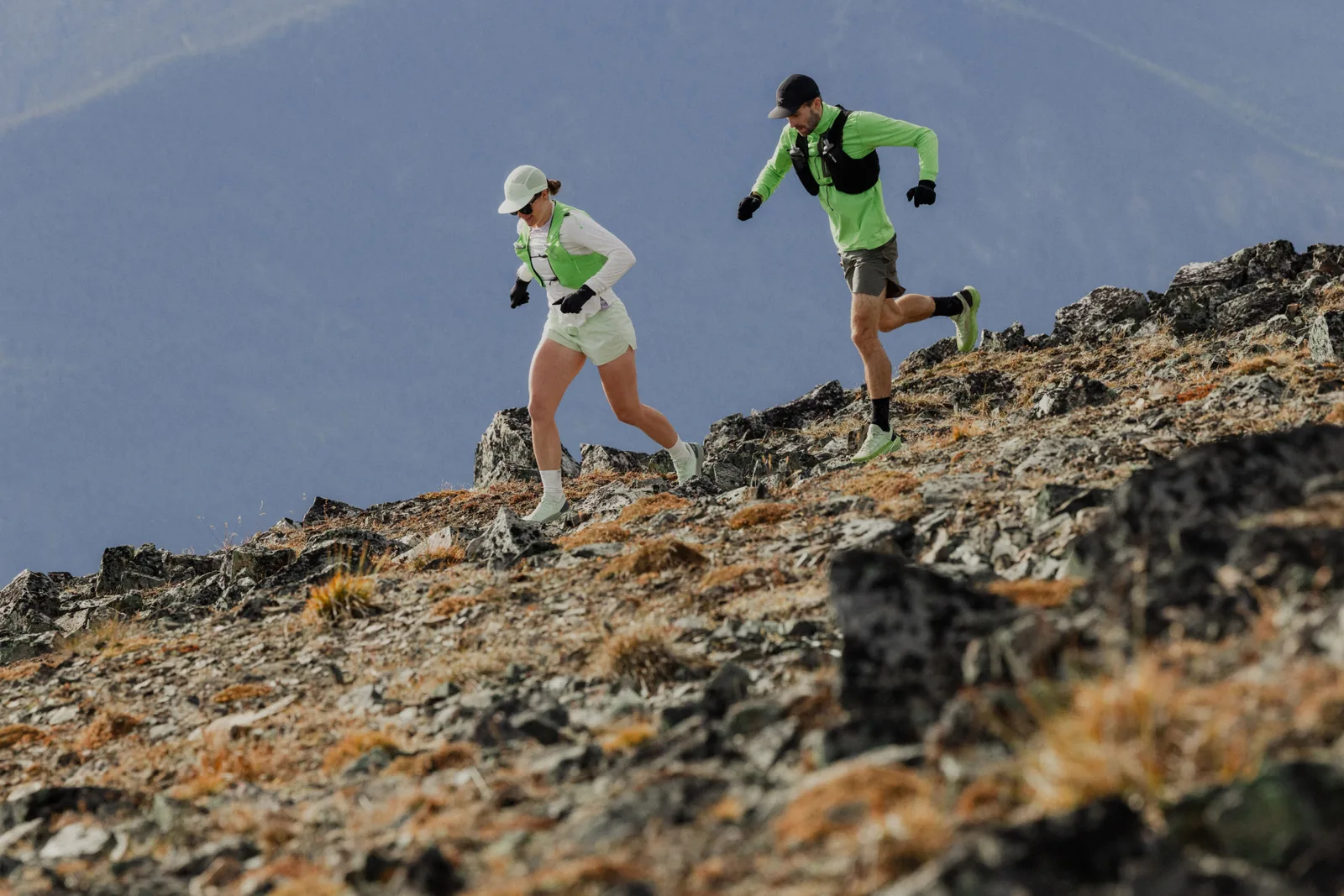
Shoes are probably the most important product. Jackets might be my favourite. I love this stuff. For years I ran in Patagonia's Houdini and products like it because the concept is just so good. Minimal weight. Packable. Enough protection when conditions turn. Then stuff it away when you don't need it. In recent years I've started spending more time in technical product from Arc'teryx and Norrona and the level of engineering going into lightweight mountain apparel now is crazy. Products like the Norrona Senja GORE-TEX Jacket show where the category has gone. Proper weather protection, built for high-output mountain movement, with the kind of packability that actually makes sense for running. Arc'teryx has its Norvan running range sitting in the same broad space, while Patagonia remains one of those brands I trust because its product is generally straightforward and does what it says it is going to do. But please don't interpret this section as: Buy the most waterproof jacket you can afford. That isn't the answer. Running generates heat.
A lot of it. There is very little point owning an unbelievably waterproof shell if you are creating your own tropical climate inside it. Breathability matters. Ventilation matters. Pack size matters massively to me. And sometimes all I really need is enough wind protection to take the edge off. The more exposed, cold or remote the run becomes, the more serious my weather protection becomes. That's the distinction.
New Zealand Weather Will Eventually Humble You
We have a special talent in New Zealand for experiencing several seasons before breakfast. That isn't marketing copy. I have been caught out enough times to know better. One of the more memorable occasions happened around the Auckland floods. Auckland had experienced huge flooding the day before. The following morning it wasn't raining when I woke up and some genius inside my head decided: Looks good. Let's go to Riverhead. Great idea. The trails had other plans. Fair to say I almost swam home. Water everywhere. At that point you stop thinking about whether the colour of your shorts matches your shoes and start learning very quickly what drains, what holds water, what becomes heavy and what still works when conditions are horrible. My shoes weren't GORE-TEX. On that particular day, I was actually glad. Once you're dealing with that much water, it is getting into the shoe anyway. The ability for footwear and clothing to remain light and move moisture becomes considerably more relevant than attempting to keep every drop of water out. That run also reinforced why I carry a jacket far more often these days.
Weather forecasts are useful. They're not legally binding.
Waterproof vs Windproof for Trail Running
This distinction is worth understanding. A wind shell and a waterproof shell are not the same thing. If I'm staying relatively close to civilisation, conditions are mild and the primary issue is wind or a passing shower, I love a really lightweight shell. They pack down to virtually nothing and can make a surprisingly big difference. If I'm heading somewhere exposed, cold or remote and meaningful rain is possible, I want an actual waterproof shell. That costs more. It generally weighs more. It often breathes less. But in the environment it was designed for, those compromises are completely justified. This is where customers sometimes become obsessed with specifications. Waterproof ratings. RET numbers. Membrane names. Three-layer versus 2.5-layer. All useful. But ask the first question first. Where are you going? A $1,000 technical mountain shell for a 45-minute summer run around your local park is probably a bit silly. Take the same jacket into exposed mountain country with a horrific forecast and suddenly the price starts looking considerably more rational.
The product hasn't changed. The job has.
Trail Running Shorts: Small Product, Big Consequences
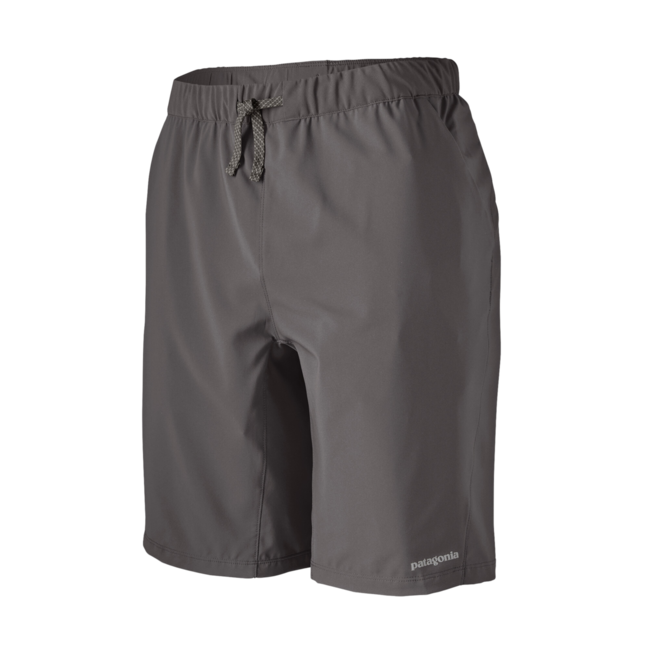
I am stubbornly a shorts guy. Always have been. I never really made the transition away from them and at this stage I'm not planning to. One thing I am considerably less flexible on is 2-in-1 construction. Chafing is one of those problems that sounds incredibly minor while you're standing inside a shop. Go and experience it after three hours of running and come back to me. Suddenly that inner liner becomes quite an impressive piece of technology. I like relatively simple shorts. Good liner. No unnecessary movement. Enough storage for what I actually need. Materials that dry quickly. That's about it. Again, running product has become incredibly sophisticated, but sophistication should result in simplicity for the person using it. I shouldn't be thinking about my shorts at kilometre 12.
Merino vs Synthetic for Trail Running
I probably upset a few New Zealanders here. I'm not religious about merino. I think it's a fantastic fibre. I also think modern synthetic performance fabrics are outrageously good. For high-output running, synthetics can be light, fast drying and brilliant at moving moisture. Brands like Patagonia have had me covered for years in this space. Merino becomes particularly attractive when temperature regulation, odour control and multi-day wear become more important. In cold NZ conditions, a good merino or blended base layer can be exceptional. So this isn't: Merino vs synthetic. Pick a winner. It is: What are you asking the fabric to do? That's a theme you might be noticing.
Base Layers: Boring Until You Need One
Summer is easy. There are plenty of summer runs where I would happily head out in shorts and not much else. Winter is different. A proper base layer is one of those incredibly unexciting purchases that can quietly transform cold-weather running. I want something that manages moisture while keeping enough warmth against the body that I don't freeze when effort drops or conditions change. What I don't want is something that becomes a wet towel underneath my jacket. This is where technical fibres actually earn their money. And if your trail running extends through New Zealand winter, I would treat the base layer as part of the system rather than an optional extra.
Trail Running Headlamps: You Cannot Run Through What You Cannot See
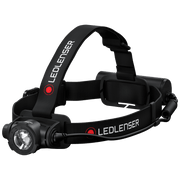
My alarm often goes off at 4:30am. There is something about being out working while everyone else is asleep that I love. It is probably part running, part mindset and part insanity. But if you're running trails at that time, there's one fairly obvious problem. It is dark. My view on headlamps is exceptionally simple. If you cannot see, how can you move forward? Running roads under streetlights is one thing. Moving quickly through roots, holes, rocks and uneven ground is another. I have historically used Ledlenser because I trust the quality and I think this is one category where cheap equipment can create genuine problems. Brightness matters. But beam shape matters too. Battery life matters. Comfort matters. How the light sits on your head matters. And if you're heading somewhere remote at night, redundancy starts becoming important. A 900-lumen headline on a box is pretty useless if the battery doesn't last long enough for the run. I would always buy a headlamp based on the conditions and duration you actually need rather than simply chasing the biggest lumen number.
Sunglasses: The Thing I Keep Forgetting
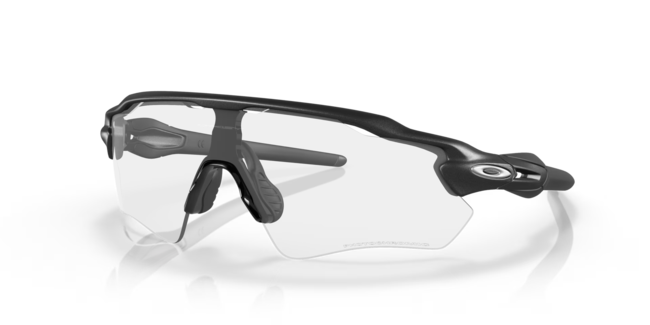
This one comes directly from repeatedly being an idiot. Because I start running before sunrise, there are mornings where sunglasses feel like a completely ridiculous thing to take. Then the sun comes up. Auckland can produce unbelievable sunrises, particularly out west as the light pushes across from the east, and suddenly I am squinting into it wondering why I didn't put my glasses in the vest. Again. I've done this enough times that I now try to lay my running gear out the night before. Shoes. Socks. Shorts. Vest. Jacket. Sunglasses. Done. These little routines remove stupid decisions at 4:30 in the morning. My current preference is Oakley Radar EVs, but the principle is considerably more important than the brand. Good sports eyewear needs to stay put. It needs to deal with sweat. It needs enough coverage. And ideally I forget it exists.
Trail Running Poles: I'm Not Going to Pretend I'm the Expert
This is where authenticity matters. I don't personally run with poles. My preferred 10-15km style of trail running doesn't really require them, so I'm not going to suddenly tell you that I've spent years perfecting my pole technique. I haven't. What I have done is spend years talking to runners who use them, suppliers who build them and people undertaking considerably longer events than I normally want anything to do with. And there is clearly a place for them. Long climbs. Big vertical days. Ultras. Technical terrain. Endurance efforts where taking load away from the legs can keep somebody moving considerably longer. I particularly understand the value for runners who might otherwise need to stop. Age. Fatigue. Long-distance endurance. Big climbs late in an event. Poles are not cheating. They are equipment. The mistake is buying them because ultra runners on Instagram have them when you spend most Sundays running 8km around a local forest. Same rule. Buy for the job.
GPS Watches, Strava & The Data Obsession
I might be slightly unusual here. I'm not a Strava athlete. I understand why people love it. It just doesn't drive my running. I don't need every run to become another data set or another opportunity to compare myself with somebody on the internet. I run with a Whoop and I care about overall movement and what my body is doing, but I don't spend the entire run staring at pace numbers. Speed is in my head. Perhaps that's old-fashioned. I don't particularly care. If GPS navigation, pace strategy and detailed training analytics make you better, use them. There are brilliant watches available. But please don't confuse collecting data with running. You can own a $1,500 watch and still have a shit run.
The Trail Running Brands I'm Watching in 2026
This is probably where my retailer brain starts taking over. There has never been a more interesting time in trail running because the category is attracting genuinely excellent brands. But I don't think every brand can win simply by putting trail product into its catalogue. Consumers can feel focus. They know when a brand genuinely lives somewhere. Right now I think Salomon is sitting on an absolute heater. I have been around sports and outdoor brands since I was 15 and I genuinely cannot remember many periods where one brand has executed across an entire category this well. Shoes. Vests. Socks. Apparel. Technical credibility. Fashion relevance. Athletes. Product. It all connects. Then you have Norda. For me they remain the king of premium innovation. Their 001A still fascinates me because it attacks the traditional problem of making trail shoes both lightweight and genuinely durable. HOKA remains one of the safest recommendations in modern running because they helped completely reshape what consumers expect from cushioning. On is probably the fastest-moving challenger in the wider running world and I think its trail proposition is becoming considerably more convincing.
Then there is Adidas Terrex. I have a soft spot for Adidas. The design flair within Adizero has me wrapped and I'm particularly interested in how Adidas continues pulling that performance language into Terrex. I also have one eye firmly on what they're doing around collaborations and the more fashion-influenced edge of outdoor. And apparel? Patagonia is still the safe bet for me. Arc'teryx and Norrona are doing some incredibly technical things when the brief becomes more serious. What I love is that all of these brands come at the same sport from slightly different directions. That's healthy. It pushes the category forward.
What Trail Running Gear Is Worth Spending More On?
Footwear. Next question. Seriously though, if I am allocating somebody's budget, shoes are my first priority. Nail your feet. Everything else becomes considerably easier. From there, I would spend according to the problem you're trying to solve. If you run in genuinely bad weather, a good jacket is worth money. If you're running long enough that you're carrying water regularly, buy a vest that fits properly. If you're running before sunrise several times a week, buy a proper headlamp. But apparel is one area where you can often be more flexible. Do you need a $180 T-shirt to run well? No. Do you need an $800 shell for every run? Definitely not. Could an $800 technical shell be worth every dollar in the right environment? Absolutely. That is the nuance. I don't believe premium equipment is automatically overpriced. But premium equipment still needs to solve a premium problem.
The Mistake I See Customers Make Most Often
Familiarity. The trail category is changing so quickly that people often walk into the store asking for what they've always bought. That is human nature. But product has moved. We talked about it extensively in our Trail Running Shoes vs Hiking Shoes vs Hiking Boots guide. Someone might automatically ask for a hiking boot because they're going hiking. Why? Depending on the route and load, a modern hiking shoe or even trail runner might make considerably more sense. The same thing happens everywhere else. People who have never used a hydration vest assume they don't need one. People who have always worn cotton T-shirts don't understand why technical fibres matter. People buy GORE-TEX because waterproof sounds better without asking whether fast drainage might actually suit their run. The answer isn't chasing new gear every season. That is just consumerism. The answer is staying interested enough to recognise when product genuinely gets better. I spend half my working life trying to keep Land & Sea's digital channels on the pulse and much of the other half talking directly with customers and suppliers. Then I spend a ridiculous amount of my spare time actually using the stuff.
Why? Because the gear keeps changing. We need to keep learning with it.
My 10km Trail Running Kit
This is probably where people expect me to reveal some massive equipment list. Sorry to disappoint you. I keep it pretty simple. Right now, my normal kit is built around the Salomon gravel footwear I've been testing, Salomon S/LAB vest, Courier socks, Oakley Radar EV eyewear and Patagonia running apparel. That's basically it. If weather looks questionable, a jacket comes with me. If it's dark, headlamp. Phone always. Water depending on conditions. I'm not packing emergency bivvy equipment to run 10km around Riverhead. That isn't preparation. That's theatre.
My 25km Trail Running Kit
Almost exactly the same. And this is something I feel quite strongly about. I don't have a "short-distance personality" and a completely different "long-distance personality". If my shoes work, they work. If my vest fits, it fits. If my socks don't blister my feet, why would I change them? Keep it simple, stupid. What changes is what goes inside the system. More water. More nutrition. Weather protection. Potentially more storage. Maybe lighting depending on timing. The core gear stays familiar. That familiarity matters when you're tired.
My All-Day or Remote Trail Running Kit
This is where I start thinking considerably harder. Not necessarily about the obvious stuff like my shoes. By that point I should already know I trust them. The big one for me is weather. Temperature. Exposure. How quickly conditions could change. How fit am I? How long could I actually be out there? What happens if I stop moving? What packs down small enough that I don't resent carrying it but provides enough protection if I genuinely need it? This is where technical jackets and layering suddenly become much more important. It's also where communications and safety equipment deserve considerably more thought. Once you move further from the car, small equipment decisions start carrying larger consequences.
Trail Running Gear for New Zealand Conditions
This is where I think NZ runners need to ignore some of the generic advice coming from overseas. Our environment is incredibly varied. Wet bush. Clay. Roots. Gravel. Volcanic rock. Coastline. Exposed alpine terrain. River crossings. Strong sun. Cold mornings. And sometimes all of it in the same day. A pair of shoes that is perfect for dry American hardpack might not be what I want underneath me on wet Auckland clay. Likewise, heavy waterproof equipment that makes sense in a cold alpine environment could be absolutely horrible while smashing out a humid summer run through native bush. There is no universal "NZ trail running kit". That's what makes our market interesting. You build around the run.
Trail Running Gear for Beginners
If you're new to the sport, I don't want this article to convince you that you need $2,500 worth of equipment before you're allowed into the forest. You don't. Start running. Get good shoes. Wear comfortable technical clothing. Carry what the environment requires. Then learn. You will eventually discover which problems you actually have. Maybe your feet blister. Maybe you hate carrying bottles. Maybe you run cold. Maybe your shorts rub. Maybe you start running far enough that you need more storage. Solve those problems as they appear. I have spent most of my life surrounded by equipment and I'm still learning how my own body responds to it. That curiosity is part of the fun. Don't lose it.
Trail Running Gear for Longer Distances & Ultras
This is where I hand some of the conversation to people with more experience than me. I have pushed beyond 30km and learnt a few memorable lessons doing it. But I'm not an ultra runner. My sweet spot is 10-15km and I have no interest in pretending otherwise. What I do know from years of selling to ultra runners and talking with suppliers is that as distance increases, small issues compound. A tiny rub becomes chafing. A slightly poor fit becomes a blister. Being 300ml short on water becomes a genuine problem. A jacket you hated carrying suddenly becomes the most valuable thing you own when the weather changes. Storage matters more. Nutrition becomes a strategy rather than a snack. Poles start becoming legitimate equipment. And mandatory race lists need to be taken seriously. This is also where trying equipment before race day becomes incredibly important. Nothing new on race day is old advice for a reason.
Trail Running Gear Checklist: What Would I Prioritise?
Instead of giving you 25 things to buy, I would think about it in this order. First: Your feet. Shoes and socks. Get those wrong and nothing else matters. Second: Your environment. Weather protection, clothing and lighting. Third: Hydration & fuel. Particularly as distance increases. Fourth: Carry system. A vest that lets you carry everything above comfortably. Fifth: Safety. Communication, navigation and equipment appropriate to where you're going. Everything after that is refinement. And yes, refinement is fun. I'm a gear nerd. I get it. But don't confuse wanting something with needing it. Both are perfectly acceptable reasons to buy gear, by the way. Just know which one you're doing.
Frequently Asked Questions About Trail Running Gear
What gear do I need for trail running?
Do I need a hydration vest for trail running?
What size trail-running vest should I buy?
What should I wear trail running in New Zealand?
Do trail runners need waterproof jackets?
Should trail running shoes be waterproof?
Do I need trail-running poles?
How much water should I carry trail running?
What should I carry on a 10km trail run?
What should I carry for a long trail run?
Are expensive trail-running shoes worth it?
What is the most important piece of trail-running gear?
My Take
I love gear. Probably too much. I love trying something new. I love understanding why somebody designed it. I love seeing a clever solution to a problem and thinking: Yep. That's good. But after more than 25 years of running and more than two decades working around sports and outdoor product, I've probably become less interested in owning more gear. I'm interested in owning the right gear. There is a difference. The best creative minds make complicated things feel simple. I think great outdoor equipment should do exactly the same thing. The perfect running shoe is the one I stop thinking about. The perfect vest disappears around my body. The perfect jacket sits forgotten inside that vest until the exact moment I need it. The perfect headlamp lets me run at 4:30 in the morning without thinking about darkness. That is good product. My advice is to allocate a budget and buy the best gear you can reasonably afford. Prioritise your footwear. Don't change something that works simply because Instagram told you there is a new version. But stay interested.
Technology moves quickly and sometimes a product genuinely does change what is possible. I know that because I've been stubborn enough over the years to dismiss plenty of things before eventually trying them and thinking: Shit. I should have bought this years ago. Hydration vests were one. Technical jackets were another. And I can guarantee there will be more. That is part of what keeps me interested in trail running. There is always something to learn. Always some way to get a little better. And once everything is dialled in, the gear should disappear and leave you with the thing we actually came for in the first place. The trail.