

Best Trail Running Shoes NZ
Best Trail Running Shoes NZ: A Complete Guide to 2026
As an outdoor enthusiast, I have dedicated the last 20 years to keeping my finger on the pulse when it comes to outdoor brands, trends & general product development. I have witnessed a fair share of changes and developments across each sector of the outdoor industry, but nothing like what is currently unfolding within trail running & footwear right now. In my opinion, it's the perfect storm which has eventuated due to socioeconomic factors, a global wellness movement, a dramatic shift in how brands are presenting themselves to consumers and a technological shift which has created more new products than ever.
Five to ten years ago, if you asked the average consumer to name the biggest running footwear brands, you would probably hear the same handful of names. Nike, Adidas, New Balance & ASICS. But if I had told you then that brands like HOKA, Salomon, On & Norda would become some of the most influential names shaping modern trail footwear, I would forgive you for questioning my predictions. In fact, during my youth while competing at Stanford University, I can still remember turning to a good friend of mine and asking him if any brands outside of Nike & Adidas existed in the United States. HOKA and On were barely on the radar, Norda did not exist, and Salomon was known to most people for its mountain heritage rather than as one of the hottest footwear brands on earth. The emergence of these brands is one thing, but there are other factors driving the cult culture that now engulfs the trail running scene.
Covid-19 changed the world, I don't need to remind you of that. But in my lifetime we have never seen a greater shift towards people spending time outdoors. Covid reminded us that our health was our wealth & that happiness is not solely driven by the capital gain we see on our homes. Younger generations have placed a noticeably greater focus on wellness, experiences & community, and as a result our population has a wellness focus like never before. As someone who has dedicated their life to the outdoors and the health benefits of that lifestyle, I'm a fan of the shift.
With consideration to the quickly evolving landscape, I have taken the opportunity to provide our take on all things trail running. Today we are going to discuss the newness being delivered by the global leaders within the space, how we see each brand's future within trail running & ultimately what we believe are the best trail running shoes in NZ for 2026.
What makes a good trail running shoe?
Before we dive into exactly which trail running shoes you should consider this year, it's important we understand what actually makes a good trail running shoe. As I mentioned above, the technology has changed drastically since I was trotting around Stanford University running cross country. The first observation I would make is that, much like hiking shoes, modern trail footwear continues to get lighter without giving away the protection, structure & grip we actually need off-road. Materials are stronger, tooling is better and outsole technology has come a very long way. Let's break it down point by point so the technical jargon actually means something. One by one.
Grip & Outsole Rubber
Grip is probably the first thing I look at in a proper trail shoe. It doesn't matter how good the cushioning feels if you can't trust the shoe when the ground gets wet, loose or technical. Rubber compounds like Vibram Megagrip, Contagrip and ASICSGRIP have become benchmarks for a reason. Good outsole rubber should give you confidence on wet rock, roots and hardpack without feeling like you're dragging a tractor tyre around underneath you.
Lug Depth
Lugs are basically the teeth underneath your shoe, but deeper isn't automatically better. Around 3-4mm works beautifully on mixed trail, gravel and harder surfaces. Once you get into 5-6mm territory, you're generally looking at shoes designed for mud, steep ground and softer terrain. The trade-off is that aggressive lugs can feel clumsy on road and hardpack. Match the lug depth to where you actually run, not where you imagine yourself running.
Cushioning
Cushioning has changed trail running completely. We've gone from relatively firm, low-profile shoes to some seriously soft and protective platforms. Personally, I like enough cushioning to protect my legs over distance without completely removing the trail from underneath me. More cushioning tends to shine on long days and ultras. Less cushioning usually gives you better ground feel and precision. Neither is right or wrong. It depends on the job.
Stack Height
Stack height is simply how much material sits between your foot and the ground. Higher stack generally means more protection and cushioning, but it can also mean less ground feel and, in some cases, less stability on technical terrain. Lower-stack shoes tend to feel quicker and more precise. I wouldn't obsess over the number itself, but I would understand what it tells you about how the shoe is likely to behave.
Heel-to-toe Drop
Heel-to-toe drop is the difference in height between your heel and forefoot. Higher-drop shoes can feel more familiar to runners coming from traditional road footwear and can take some load away from the calves. Lower-drop shoes tend to encourage a more natural, midfoot-oriented stride but can place more demand on your calves and Achilles. My advice here is simple: don't chase trends. Run in what your body actually responds well to.
Stability
Trail stability is massively underrated. Once you're running across rocks, roots, cambers and uneven ground, a shoe that feels amazing on a treadmill can suddenly feel like a liability. Width through the platform, how your foot sits inside the midsole, sidewall support and overall stack height all play a part. I want a trail shoe to feel planted. When I put my foot down, I don't want to spend the next half-second wondering where it's going.
Rock Plates & Underfoot Protection
Rock plates sit between the trail and your foot and are designed to stop sharp rocks from punching straight through the shoe. They're brilliant on technical, rocky terrain, but not every runner or trail needs one. A heavily cushioned midsole can sometimes provide enough protection on its own. Personally, I like rock plates when the terrain becomes nasty, but I don't want the shoe to become so stiff that I lose all feeling underneath me.
Upper Durability
Trail uppers take an absolute beating. Rocks, branches, mud, water and constant lateral movement will expose a weak upper pretty quickly. I look for reinforced toe protection, strong mesh, good overlays and secure construction around the midfoot. The trick is getting durability without turning the shoe into something hot and heavy. The best trail uppers almost disappear on your foot while still surviving everything you throw at them.
Fit & Toe-box Shape
Fit matters more than almost anything else in this guide. A brilliant shoe that doesn't suit your foot is still the wrong shoe. I generally want a secure heel and midfoot with enough room through the front for my toes to spread naturally, particularly as distances increase and feet start to swell. Some runners love a precise, locked-in Salomon-style fit. Others need more space. Don't buy a shoe because somebody else loves it. Your foot gets the final vote.
Waterproof vs Fast Draining
This one depends entirely on how and where you run. Waterproof trail shoes are brilliant in cold conditions, wet grass, mud and shallow water. The downside is that once water gets inside, it can take considerably longer to get back out. For warmer conditions and river crossings, I often prefer a highly breathable shoe that drains quickly. In New Zealand, both have a place. Just understand what problem you're actually trying to solve.
Weight
Weight matters, but probably less than people think. A lighter shoe can feel incredible when you're moving quickly, racing or running shorter technical trails. But shaving grams at the expense of cushioning, protection or durability can become pretty uncomfortable several hours into a run. I'm far more interested in how light a shoe feels on foot than what the number says on a spreadsheet. Balance wins here.
Durability
Trail shoes are expensive, so durability matters. But this is also one of the hardest things to judge from a spec sheet. Outsole rubber, midsole compression, upper construction and how aggressively you run all influence how long a shoe lasts. I'd rather spend more on a shoe that performs properly and survives hundreds of kilometres than save money on something that starts falling apart after a few decent missions. Good trail footwear should be used hard, not treated carefully.
At Land & Sea we do everything we can to make sure you are not overwhelmed by too much information, but sometimes it's worth knowing the basics. That is a pretty solid overview of the key features you will hear me and our team talk about often.
The biggest trail running brands in 2026
Is there a more competitive product space in the outdoor market than trail running shoes? Even when it comes to the best trail running shoes of 2026, there are no doubt some high-quality brands that won't make the cut. I'll accept some criticism for not including Brooks, Saucony, Altra, La Sportiva, Nike or Merrell in the following comparison table. These are serious brands that deserve to be mentioned in one way, shape or form. The easiest way to compare the world's leading trail brands is with a simple, easy-to-read table. Take a look below & you will get a pretty fair idea of what each brand nails within trail running this year.
| Brand | Trail identity | Key 2026 shoes | Grip / outsole | Ride & fit | Best suited to |
|---|---|---|---|---|---|
| HOKA | Modern trail pioneer built around cushioning, rockers & running long in the mountains | Speedgoat 7, Mafate 5, Challenger 8 | Vibram Megagrip on its more technical models; 4-5mm lugs depending on shoe | Generally cushioned, stable & forgiving. Wide options are a genuine strength | All-round trail, long distance, road-to-trail & runners who like cushioning |
| Salomon | Deep technical mountain-running heritage and one of the most complete trail ecosystems | Speedcross 6, Genesis 2, Ultra Glide 4, S/LAB | Contagrip compounds matched to terrain, from mud-focused to mixed technical trail | Secure, precise & controlled. Modern models are becoming more accommodating | Technical terrain, mud, mountain running, ultras & runners who value lockdown |
| ASICS | A huge running R&D machine increasingly applying its best foam and grip technology to trail | GEL-Trabuco 14, Trabuco Max 5, Fuji Lite 7 | ASICSGRIP is excellent across wet rock, hardpack and mixed terrain | Predictable, comfortable & technically polished, with options from agile to max cushion | Runners wanting proven running technology, dependable grip & strong value |
| Norda | Trail-only premium specialist obsessed with materials, durability & performance | 001A, 002, 005 | Custom Vibram platforms using Megagrip and Litebase technology | Secure, durable & connected rather than excessively soft | Serious trail runners, fast hikers & people prepared to pay for premium construction |
| On | Fast-moving Swiss challenger bringing road-running innovation into a growing trail ecosystem | Cloudvista 3, Cloudultra, Cloudultra Pro | Missiongrip outsole technology developed specifically for trail traction | Modern, smooth & increasingly performance-focused, while retaining On's distinctive feel | Everyday trail, mixed terrain & runners who already enjoy On's road footwear |
| Adidas Terrex | Global footwear technology paired with a dedicated mountain and trail programme | Agravic 3, Agravic Speed, Agravic Speed Ultra | Continental rubber features across key Terrex trail models | Fast, responsive & increasingly race-focused at the performance end | Trail racing, faster running & athletes who want a more road-racing-inspired feel |
| Arc'teryx | Technical mountain brand taking a focused, problem-solving approach to trail footwear | Norvan LD 4, Sylan Pro, Vertex | Vibram Megagrip across key technical models, including 6mm lugs on Sylan Pro | Precise, mountain-focused & generally built around control rather than softness | Technical mountain terrain, wet NZ conditions & runners who prioritise precision |

HOKA Trail Running Shoes
I've said this to many of my friends and colleagues, but if you told me 10 years ago that a relatively new brand was going to challenge the traditional footwear giants and become one of the most worn performance footwear brands in the world, I probably would have called you crazy.
But, hey... HOKA, there you are.
And what makes the HOKA story particularly relevant to this guide is that trail running isn't some category they stumbled into once the brand became successful.
Trail is quite literally where HOKA came from.
Founders Jean-Luc Diard and Nicolas Mermoud were mountain runners who were trying to solve a fairly simple problem. How could they run downhill faster, for longer, without absolutely destroying their legs in the process?
Their answer went against almost everything the running industry was doing at the time. More cushioning. More foam. A wider platform. A big rocker through the shoe.
Today none of that sounds particularly outrageous because almost every major running company in the world has adopted some variation of it. But back then, HOKAs looked ridiculous. Honestly, they looked like moon boots.
The original HOKA Mafate was born out of testing in the mountains, including the trails around Mt Etna, and the founders themselves describe their original mission as improving endurance racing by creating a shoe that allowed athletes to run downhill faster. Somewhere along the way, they accidentally helped reinvent the modern running shoe.
That is the part of HOKA's story that I think sometimes gets lost now. We see HOKA everywhere. At the airport. At the supermarket. On nurses. On runners. On people who have never run a kilometre in their life.
The brand has become so mainstream that it is easy to forget there was a point when wearing a pair of HOKAs on a trail made you look like the weird guy. Now everyone else has followed them.
And when we are specifically talking trail, there is one shoe that has probably done more than anything else to cement HOKA's position.
HOKA Speedgoat
If the Speedgoat isn't the world's most popular trail running shoe, it would have to be bloody close.
I can't find reliable global sales data to definitively claim number one, so I'm not going to pretend I can, but in terms of recognition, longevity and how often you see this shoe on runners around the world, the Speedgoat sits right at the top of the category.
There is a reason for that. It is ridiculously easy to recommend.
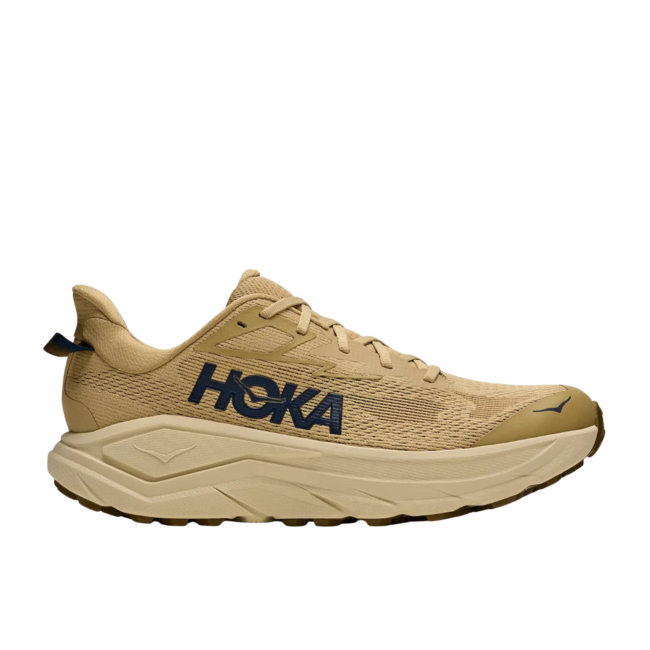
The latest Speedgoat 7 takes the basic formula that made the shoe successful and improves the part that I thought had started to lag slightly behind some of the newer trail shoes coming into the market: the midsole.
HOKA has moved to a new super-critically foamed EVA compound, creating noticeably more energy return without turning the Speedgoat into some unstable super-shoe experiment. Underneath, you still get Vibram Megagrip with Traction Lug and aggressive 5mm lugs, which is exactly what you want when the surface becomes wet, loose or technical. The upper has also been refined with a lightweight woven textile, dynamic vamp, dual-gusset tongue and even gaiter integration.
The magic of the Speedgoat is that it doesn't really have one specific job. It just does trail running.
You could put it on for a 10km forest loop, take it into proper technical terrain, spend an entire day in it or line up for an ultra. There are lighter shoes. There are faster shoes. There are softer shoes. There are more technical shoes.
But there aren't many shoes that pull everything together as well as the Speedgoat does. And that, in my opinion, is why it has become such an important shoe.
if somebody came into Land & Sea tomorrow and told me they wanted one proper trail shoe, weren't entirely sure what kind of running they were going to do and just wanted something they could trust, the Speedgoat would be one of the first shoes I reached for.
It really is that easy.
HOKA Mafate 5
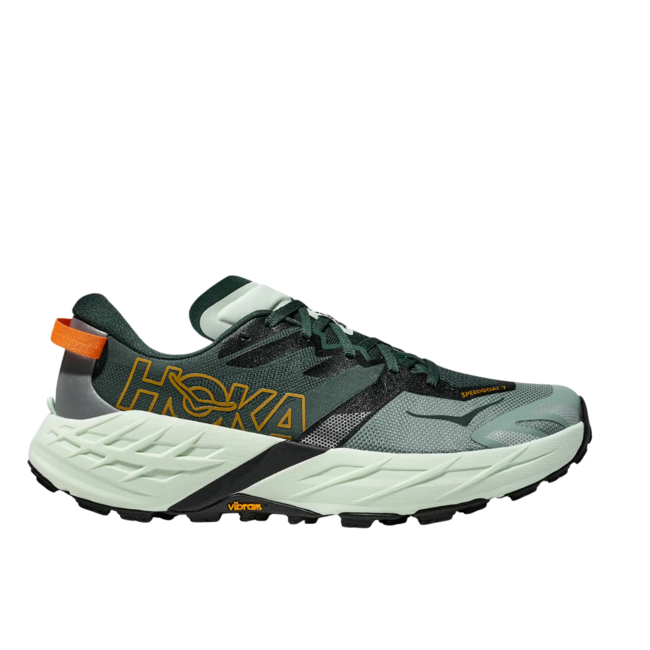
If the Speedgoat is the people's HOKA, the Mafate 5 is where things start getting a little more serious. And there is something quite cool about the Mafate name because this is where the HOKA story originally began. The current Mafate 5 takes that original mountain-running philosophy and turns everything up. More protection. More cushioning. More structure. More shoe.
Land & Sea's current Mafate 5 uses a dual-density midsole with a super-critical foam layer sitting closer to the foot, backed up by a more impact-absorbing layer underneath. HOKA has also introduced its Rocker Integrity Technology, which is designed to maintain that rolling geometry and control as you move across rough ground. Underneath it sits Vibram Megagrip with Traction Lug and 5mm lugs, while the upper gets a proper technical treatment with warp-knit construction, TPU reinforcement and gaiter attachment points.
This is a big trail shoe. You're talking around 44mm of stack through the heel on the men's version. For some runners that is going to be too much. For others, particularly people doing big mileage or spending hours moving through rocky terrain, that is exactly the point.
if you love the Speedgoat but want more protection underneath you for big days, technical terrain or ultra-distance running, I would be taking a very serious look at the Mafate.
It feels like HOKA remembering where it came from and then throwing 15 years of development at the original idea.
HOKA Challenger 8
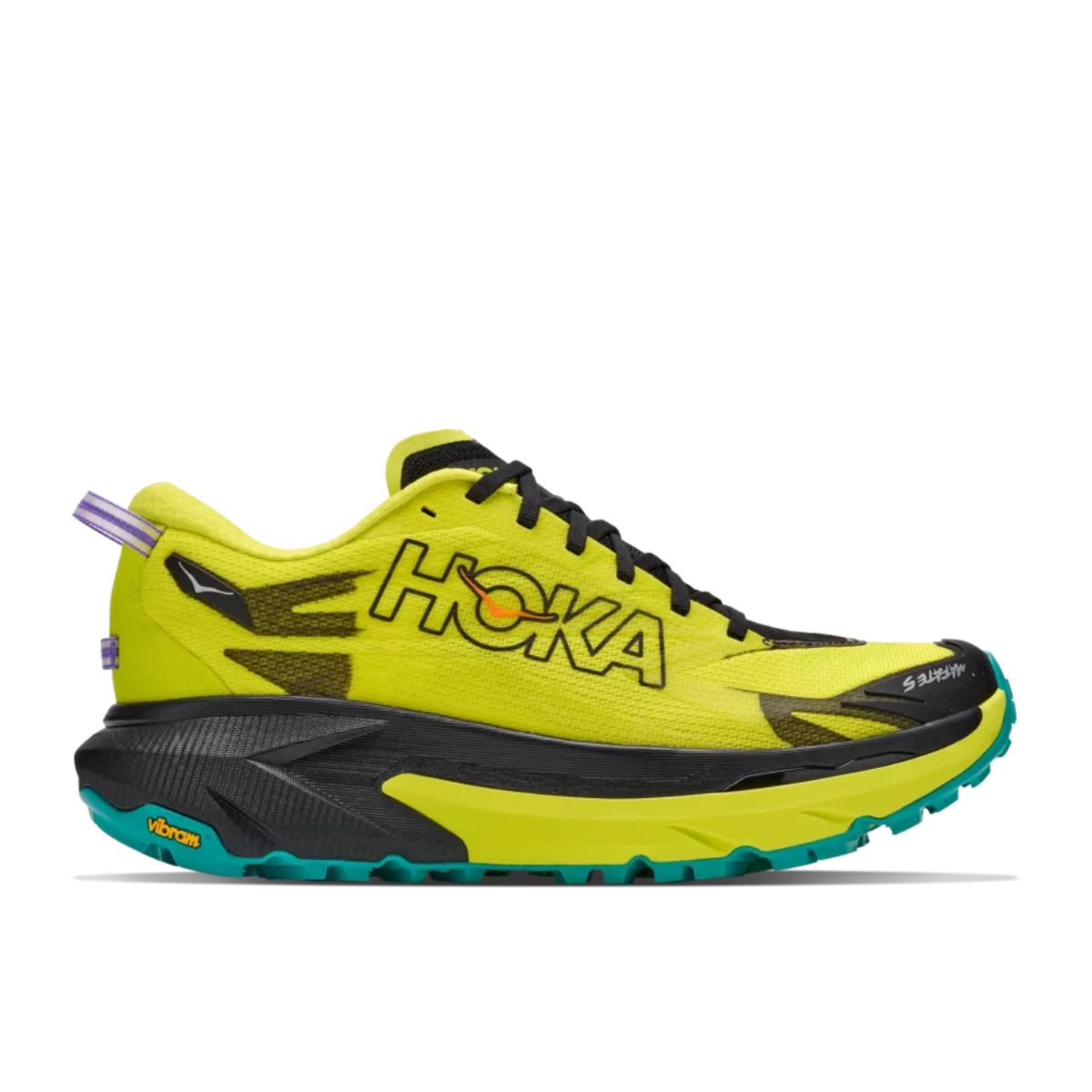
The Challenger 8 is probably the easiest HOKA trail shoe to overlook, but I actually think it makes an enormous amount of sense for how a lot of people really run.
Not every trail run begins at the trailhead.
Sometimes you leave your driveway, run two kilometres down the road, hit a gravel path, disappear into some bush and then come home again.
That is Challenger territory.
HOKA has always positioned this shoe somewhere between road and trail, and the latest Challenger 8 stays true to that formula. It uses compression-moulded EVA cushioning, multidirectional 4mm lugs and a relatively clean engineered mesh upper. It isn't trying to compete with the Speedgoat once the trail becomes properly nasty. Instead, it gives you a smoother transition between sealed surfaces, gravel, forestry roads and lighter trail.
And I think that makes it an incredibly relevant shoe in New Zealand. We have an enormous amount of running that sits somewhere between road and genuine technical trail.
if your weekly running is 50% road, 50% gravel and trail, buying a hardcore technical trail shoe probably doesn't make any sense. Buy the Challenger.
It will simply do the job better.
HOKA changed the rules
What I respect most about HOKA is that they didn't enter an established category and try to make a marginally better version of what already existed. They changed the silhouette. They changed the amount of cushioning we thought a running shoe should have. They changed the idea that a highly cushioned shoe needed to feel heavy and slow. And eventually, the rest of the industry moved in their direction.
There is a funny irony in the fact that HOKA now feels almost mainstream. Because this company wasn't created to be mainstream. It came from two mountain runners trying to bomb down hills faster.
You can still see that DNA in the Speedgoat. You can see it even more clearly in the Mafate. And even as HOKA stretches further into road running, walking and lifestyle footwear, I don't get the same feeling I sometimes get with other giant running brands that trail is simply another category on a spreadsheet. HOKA actually owes trail running something. Trail is part of the reason the company exists in the first place.
And perhaps that's why, even after the entire running world has started copying the oversized cushioning philosophy they helped popularise, HOKA still feels completely at home when you take it back into the mountains.
Salomon Trail Running Shoes
If there is a brand right now that is sitting on top of a heater within the trail running space, it's Salomon. Now, as far as I am concerned, there are a few reasons for this.
Of course, Salomon makes great products. You don't make it this far up the race course without building shoes that are trusted, proven and capable of actually doing the job. But to me, as a purist of the sport, Salomon has done something even more powerful with its brand. As a trail runner, they have never wavered from my view.
Salomon has never made me feel like trail running is simply the latest growth category being discussed around a boardroom table somewhere. They have never needed to convince me that they belong in the mountains. They just do. And I think that difference is incredibly important.
Salomon was founded in Annecy in the French Alps in 1947. They weren't originally making trail running shoes. They were building ski equipment. Bindings, boots and eventually skis. But the important part of that story is where the company was born and what has surrounded it ever since. Mountains. It is difficult to manufacture that.
When Salomon eventually moved heavily into footwear and trail running, they didn't need to invent an outdoor story around the product. The brand had already spent half a century obsessing over how athletes moved through mountain environments. The footwear was almost an extension of what they already understood. Salomon launched the XA PRO in 2002, established its international trail running team in 2004 and developed S/LAB shortly afterwards as a way of creating products directly alongside its elite athletes. Then came the Speedcross. And this is where things get interesting.
Salomon Speedcross 6
The original Speedcross was launched in 2006. Salomon's team initially thought the market for an aggressive shoe specifically designed to grip wet and muddy trails might be tiny. Their original sales forecast was reportedly around 1,000 pairs. Today, according to Salomon, the Speedcross franchise sells more than one million pairs per year in Europe alone. Think about that for a second.
A shoe developed for what was considered an obscure little corner of running became one of the most recognisable trail running shoes in the world. That doesn't happen by accident.
Kilian Jornet famously raced in the Speedcross 2 during that early period, including using it when he won UTMB in 2008. Salomon was not watching trail running grow from the sidelines. They were right in the middle of it, developing product with some of the best mountain athletes on the planet. And the Speedcross 6 still carries a lot of that original DNA. This is not the shoe I would choose if 80% of my running was hard-packed gravel. It is much more interesting than that.
The Speedcross is designed for the messy stuff. Mud. Wet grass. Loose dirt. Soft ground. Steep terrain. Those horrible sections where you put your foot down and aren't completely sure whether it is going to stay where you left it.
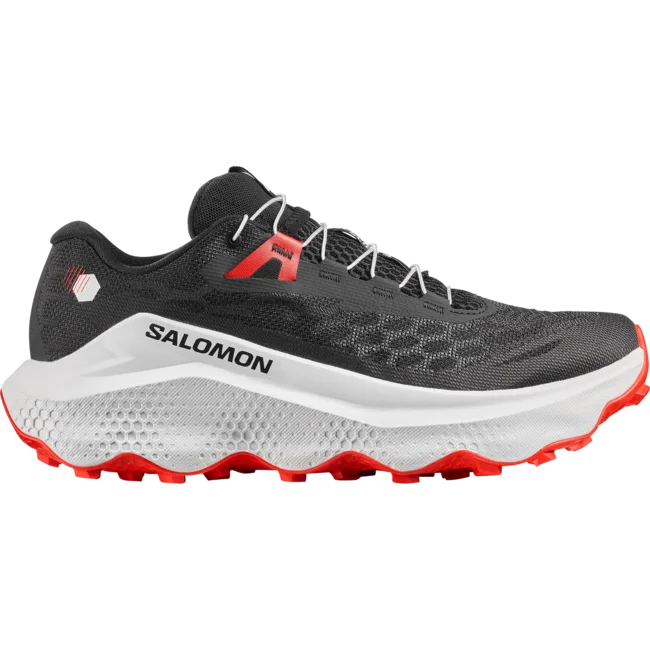
Underneath you have Salomon's Mud Contagrip outsole with aggressive 5mm lugs, which is designed specifically to bite into loose and soft terrain while clearing mud as you move. You've also got an EnergyCell+ midsole, SensiFit construction wrapping the foot and Salomon's Quicklace system, which has basically become part of the visual language of the brand itself.
The Speedcross does have a relatively traditional 10mm drop, and by modern standards it isn't trying to be the softest or most radically cushioned trail shoe in the world. But that's almost why I like it. It knows what it is.
if you're regularly running muddy New Zealand trails, wet bush, soft forestry tracks or anywhere traction matters more than bouncing along on a giant bed of foam, the Speedcross remains one of the easiest shoes in the world to recommend. There are newer shoes. There are sexier shoes. But the Speedcross has earned its reputation the hard way.
Salomon Genesis 2
Then you have the Salomon Genesis, which in my view represents where the modern Salomon trail range gets particularly interesting.
If the Speedcross is old-school Salomon trail DNA, the Genesis feels like Salomon taking everything it has learned and bringing it into a much more modern trail running shoe. This is probably the Salomon I would steer towards if you asked me for one shoe capable of handling a serious variety of terrain.
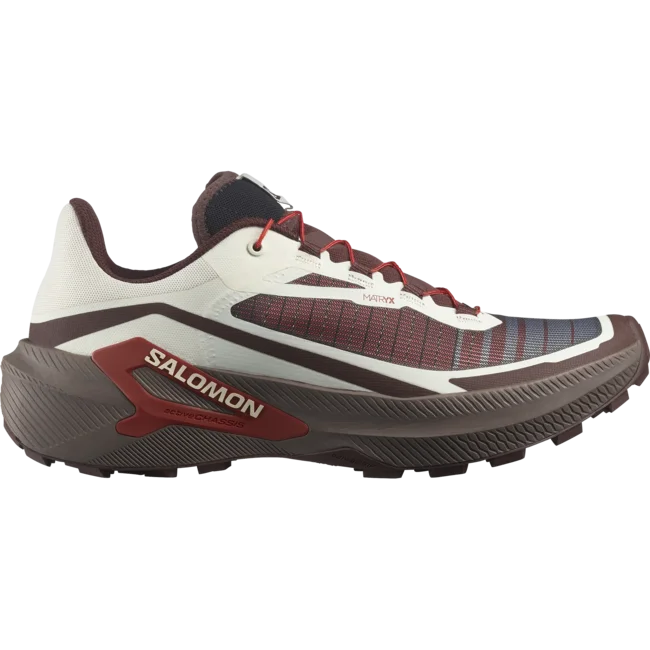
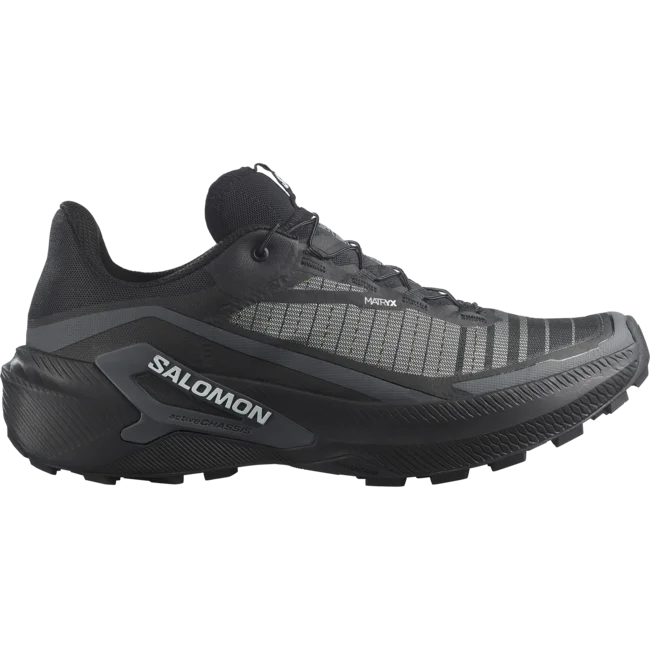
The Genesis 2 uses an optiFOAM midsole for cushioning, but Salomon pairs that with its redesigned activeCHASSIS system to keep the shoe stable when the terrain starts moving underneath you. And that combination matters.
One of my frustrations with some heavily cushioned trail shoes is that they can feel incredible when the trail is easy, then slightly ridiculous once you're trying to place your foot accurately across rocks and roots. The Genesis doesn't feel like that. There is enough cushioning to run long, but Salomon has clearly thought about control.
Our current Genesis 2 Wide at Land & Sea sits on a broader midsole platform, incorporates a fully integrated activeCHASSIS and uses a reworked All-Terrain Contagrip outsole for traction across wet, dry, hard and loose surfaces. The Matryx upper is particularly interesting, using technical yarn and high-tenacity fibres to create something that is lightweight, breathable and extremely resistant to abrasion.
You then have the classic Salomon touches. Quicklace. EndoFit wrapping the foot internally. A proper protective upper. A shoe designed around technical terrain rather than something designed in a road-running department and later given some lugs.
The Genesis 2 Wide comes in around 281g, with an 8mm drop, a 33.5mm heel stack and 4mm lugs.
Those numbers are probably less important than what the shoe is actually trying to achieve. Balance. Enough cushion. Enough protection. Enough grip. Enough stability. Without turning any one of those things up so far that it ruins the rest of the shoe.
if someone walked into Land & Sea and told me they were serious about trail running, wanted to explore more technical terrain and only wanted to own one pair of Salomons, I would have a very hard time walking past the Genesis. This thing is bloody good.
Salomon Ultra Glide 4
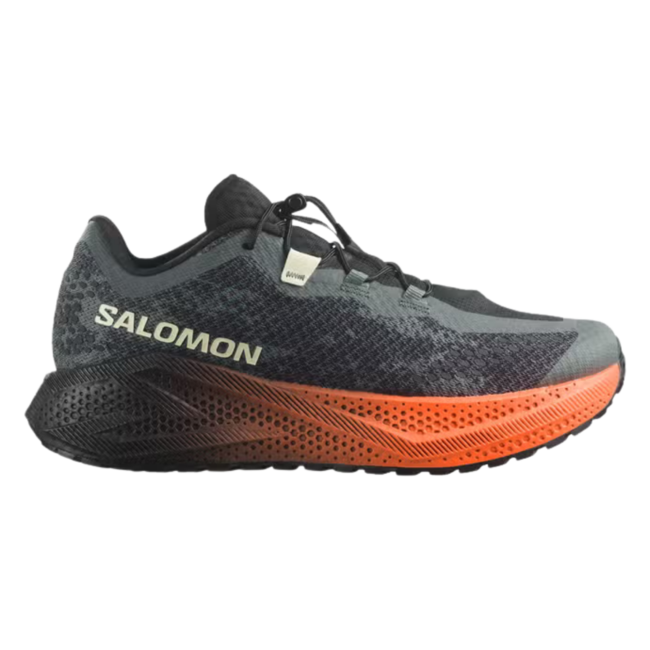
The Ultra Glide 4 is a different proposition again. This one is about distance. If the Genesis wants to attack the trail, the Ultra Glide wants to disappear down it for hours.
Salomon has gone much bigger underfoot here, with the men's version carrying a 41mm heel stack and 35mm through the forefoot, giving you a 6mm drop. That is paired with optiFOAM cushioning and something Salomon calls Relieve Sphere, which uses a distinctive wavy outsole geometry to disperse pressure underneath the foot as the miles accumulate.
That makes the Ultra Glide particularly interesting for ultra-distance trail running and runners whose priority is simply remaining comfortable for a bloody long time. At 285g, it is also reasonably impressive that Salomon has been able to put that much shoe underneath you without creating something enormously heavy.
You still get All Terrain Contagrip underneath, this time using 4mm lugs, so I would view the Ultra Glide as more of a mixed-terrain distance machine than an outright mud weapon like the Speedcross.
The upper is also intentionally simpler and more breathable, with EndoFit holding the foot securely and Quicklace taking care of adjustment. For New Zealand runners, I think this shoe makes a heap of sense. Not every trail we run is insanely technical.
Think long gravel sections. Forestry roads. Rolling singletrack. Great Walk-style terrain. Long training days where comfort starts becoming considerably more important at kilometre 30 than how cool your shoe looked when you left the car park. That is where the Ultra Glide comes alive.
if you're building towards your first ultra, regularly running long trail distances or simply know that your feet respond better to more cushioning, the Ultra Glide 4 would be one of the first Salomon trail running shoes I'd be trying.
Then there is S/LAB
But you cannot really talk about Salomon trail running without talking about S/LAB. This is probably one of the clearest examples of why I consider Salomon a specialist. S/LAB isn't just some premium badge Salomon puts on an expensive shoe.
Historically, it has been the place where Salomon's athletes and product teams work together to solve actual racing problems. One of my favourite examples came after Kilian Jornet failed to win the Western States 100 in 2010.
Rather than simply blaming the day, Jornet returned to Salomon effectively saying the equipment needed to be reconsidered. The resulting development process helped create the S/LAB Sense, a minimalist racing shoe built around what Kilian needed to go back and win the race. He did exactly that.
That is product development I can get behind. Not: "What colour is trending next season?" But: "Our athlete needs to run 100 miles through the mountains faster. What needs to change?"
That mindset continues with shoes like the S/LAB Genesis and newer S/LAB Ultra Glide, where Salomon is still using its elite athletes to push ideas around cushioning, stability, durability and performance before those technologies inevitably influence more accessible shoes further down the range. Salomon's international trail team itself dates back to 2004. Again, authenticity.
The really clever part about Salomon
There is another side to this story that I think makes what Salomon is doing right now absolutely fascinating. Salomon has become cool. Like, properly cool.
The XT-6 was originally developed by S/LAB for long-distance trail running. It has since somehow travelled from mountain races to the streets of Paris, Tokyo, London and New York and become a fashion icon. Salomon itself acknowledges that transformation.
And this distinction matters to me. Salomon didn't sit around one day and decide: "Trail running is becoming fashionable. Let's make ourselves look like a mountain brand." They did almost the exact opposite.
They made technical mountain product for years. Eventually fashion looked over and decided that technical mountain product was cool. That is a massive difference.
You can now see Salomon XT-6s worn with designer clothing on people who probably couldn't tell you what UTMB stands for. And somehow, instead of damaging the authenticity of the trail product, I actually think it has made the overall Salomon brand even stronger.
Because when I lace up a Genesis, I don't feel like I'm wearing the trail extension of a fashion company. I feel like the fashion world is wearing the lifestyle extension of a trail company. That is a very powerful position to own.
Salomon and the culture of trail running
Salomon has also done something that goes beyond selling shoes. They have invested in the sport itself.
In 2018, Salomon created the Golden Trail Series, bringing together some of the world's most spectacular trail races and elite athletes with the goal of increasing the visibility and excitement around trail running while retaining the soul of the sport.
Again, think about the difference. It would have been incredibly easy for Salomon to sit back and simply enjoy the growth of trail running. Instead, they built platforms around it. Athletes. Events. Content. S/LAB. Shoes. Hydration vests. Apparel.
An entire ecosystem around moving through the mountains. And this is ultimately why, when somebody asks me who the hottest trail running brand in the world is right now, I keep coming back to Salomon.
Not necessarily because every Salomon shoe is automatically the best shoe. That isn't how footwear works. Different feet. Different terrain. Different runners. But as a trail running brand, I think Salomon is currently incredibly difficult to beat.
The Speedcross represents their history. The Genesis represents where technical all-round trail footwear is heading. The Ultra Glide demonstrates that Salomon can play in the modern max-cushion space without losing its identity.
S/LAB keeps the entire programme connected to competition and athlete-driven innovation. And somehow, while all of this is happening, a 2013 trail shoe called the XT-6 has become one of the most fashionable sneakers on earth. I love that.
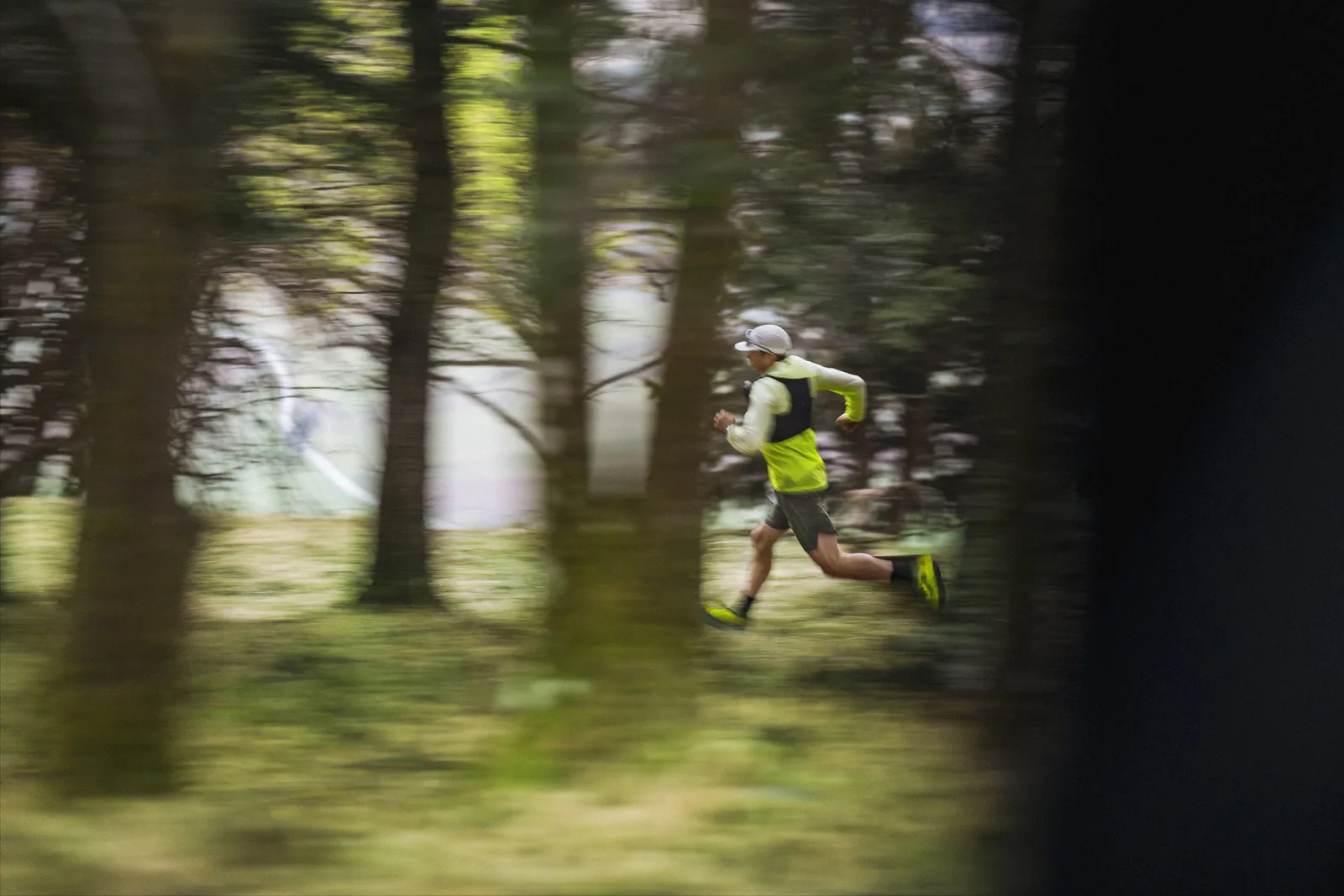
Because underneath all of the hype, collaborations, fashion stores and new consumers discovering the brand, Salomon still feels like Salomon. Born in Annecy. Raised in the mountains. Obsessed with product. And still completely at home when the pavement ends. To me, that is exactly what a trail running brand should be.
ASICS Trail Running Shoes
In contrast to the authentic, mountain-focused heritage of Salomon, ASICS is a giant across almost every performance running category imaginable.
From a purist's perspective, I cannot help but notice the increasing focus ASICS has placed on the sports lifestyle category over recent years. And to be fair, it is working. ASICS SportStyle has become an enormous part of the wider business, with everything from GEL-KAYANO 14s through to GEL-NYCs now showing up well beyond traditional running circles. The numbers back that up too. In the first half of 2026 alone, ASICS reported JPY 123.2 billion in SportStyle sales, compared with JPY 67.3 billion during the same period a year earlier.
But here's the thing. ASICS makes seriously good running shoes. We know that.
And I probably need to be careful not to confuse where the brand is culturally heading with where it has come from. ASICS has genuine running heritage. The business dates all the way back to 1949 when Kihachiro Onitsuka founded the company in Kobe around the belief that sport could improve both physical and mental wellbeing. Even when ASICS formally pushed deeper into running in the late 1970s, it launched the MONTREAL II road shoe alongside the ENDURO cross-country shoe. So this certainly isn't a brand that suddenly discovered running off-road because trail running became fashionable.
The difference, for me, is emotional.
When I look at Salomon, I see mountains. When I look at Norda, I see trail running. When I look at HOKA, I still see that strange little brand born out of ultrarunning and athletes wanting to fly downhill faster.
When I look at ASICS, I see running.
That is not necessarily a criticism. In many ways it is probably their greatest strength. Their R&D machine is enormous, their foam technology is world class, ASICSGRIP is excellent and they have decades of experience understanding how the human body moves. As a result, ASICS produces several trail shoes that are simply too good to ignore.
Let's briefly unpack the three that matter most.
ASICS Trabuco
If someone walked into Land & Sea and asked me for one ASICS trail shoe capable of doing a bit of everything, I would start with the Trabuco.
This is the dependable one.
The current Trabuco has become a genuinely polished technical trail shoe. You get ASICS' excellent ASICSGRIP rubber underneath, a rock protection plate through the forefoot, a secure midfoot and enough cushioning to spend some serious time on your feet without completely isolating yourself from the trail.
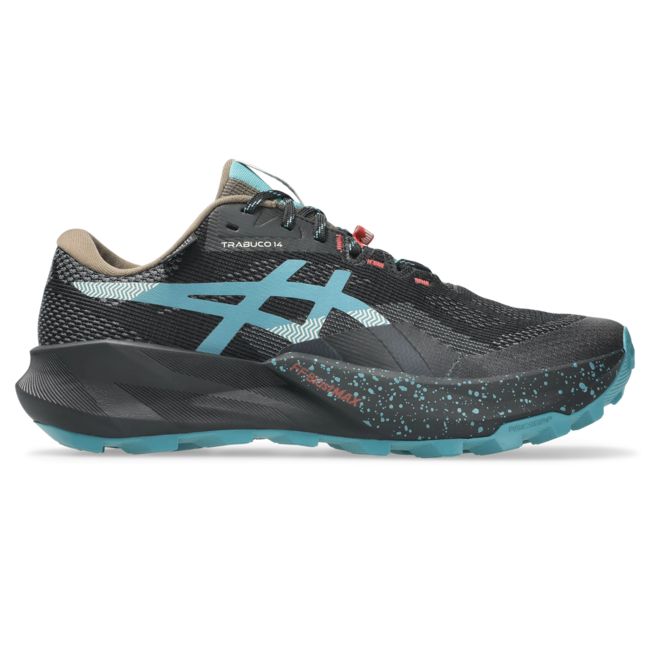
The latest Trabuco 14 takes another meaningful step forward with FF BLAST MAX cushioning and a slightly wider, more trail-specific fit. ASICS has also softened the platform and given the forefoot more room, which I think makes a lot of sense on longer runs when feet inevitably begin to swell. At around 279 grams in the men's version, it still manages to feel relatively composed rather than like some oversized hiking shoe pretending to be a runner.
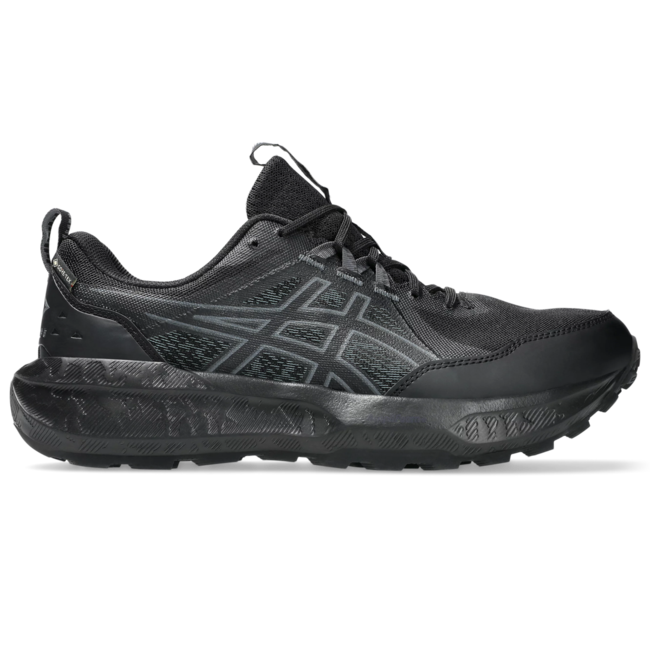
Our current GEL-Trabuco 14 GTX takes that platform and adds GORE-TEX Invisible Fit, while retaining the rock plate, ASICSGRIP and FF BLAST MAX cushioning. For wet New Zealand trails, winter missions and those runs where the weather forecast is essentially irrelevant, it is a pretty bloody compelling package.
this is the ASICS trail shoe I would recommend to the widest group of people. Stable, protective, grippy and incredibly predictable. It probably isn't going to make you feel like Kilian Jornet when you lace it up, but once you are five kilometres into a rough trail you will understand exactly why the Trabuco has been around for so long.
ASICS Trabuco Max
The Trabuco Max sits at the other end of the equation.
This is ASICS taking a lot of what it knows about high-cushion road running and throwing it at the trail category.
The current Trabuco Max 5 has a substantial 39mm heel stack, FF BLAST PLUS cushioning, ASICSGRIP and ASICS' GUIDESOLE geometry, which creates a noticeable rocker underfoot and encourages the shoe to keep rolling you forward. Despite all that shoe underneath you, ASICS has managed to get the latest men's version down to around 301 grams.
I would look at the Trabuco Max if your priority is distance.
Long trail runs, ultra training, groomed trails, forestry roads, big days on your feet or simply runners who enjoy a heap of cushioning underneath them. It removes some of the intimacy between your foot and the trail, but that is also kind of the point. When you are four hours deep into a run, intimacy with every rock underneath your forefoot isn't always what you are looking for.
the Trabuco Max is probably one of the easiest shoes in the ASICS range to understand. Maximum comfort, maximum protection and plenty of grip. If the normal Trabuco is the all-rounder, the Max is the long-haul machine.
ASICS Fuji Lite
And then there is the Fuji Lite, which is probably the ASICS trail shoe that appeals most to the purist in me.
Where the Trabuco Max adds shoe, the Fuji Lite takes it away.
The current generation sits much lower and lighter, using FF BLAST PLUS cushioning with ASICSGRIP underneath and 4mm lugs. The latest Fuji Lite 7 comes in at around 241 grams with a 4mm drop, so you get far more feedback through the shoe and a much greater sense of what is happening underneath you.
This is the shoe for faster trail running, shorter to medium-distance missions and runners who actually like feeling connected to the ground. It is flexible, agile and far less overbuilt than a lot of modern trail footwear. ASICS themselves position the Fuji Lite family as the lightweight, responsive option within their trail collection, which is exactly how it feels alongside the Trabuco models.
if the trail is relatively technical and I want to run rather than simply cover distance, this is probably where I would look first within ASICS.
And this brings me back to my slightly conflicted position on the brand.
Trail running to me is not only about ensuring I have the right product for the job. It is about how I feel when I hit that trail.
There is something emotional about this category. The mountains, the mud, the technicality, the silence and that feeling of disappearing into somewhere that road running simply cannot take you.
And there is no doubt in my mind that ASICS makes world-class trail footwear. I have absolutely no problem recommending or standing behind the Trabuco, Trabuco Max or Fuji Lite. In pure product terms, they deserve to sit alongside nearly anything else in this guide. Even our own ASICS collection reflects that pretty clearly, with the Trabuco positioned as the versatile all-rounder, Trabuco Max for long-distance cushioning and Fuji Lite sitting at the lighter, faster end of the range.
But I still cannot shake the feeling that trail running is a category ASICS knows it needs to show up in, rather than a category the entire company is completely obsessed with. Maybe that changes.
Maybe their growing FUJITRAIL programme, continued development of ASICSGRIP and increasingly serious products like METAFUJI are signs that something bigger is happening.
Or maybe those of us in running specialty have the ASICS vortex wrapped around our finger simply because the product is so bloody good. Maybe. Either way, I wouldn't bet against them.
Arc'teryx Trail Running Shoes
I'll get this out of the way early. I love Arc'teryx.
There are very few outdoor brands in the world where I can look across almost an entire range and appreciate the level of thought that has gone into the product. Sometimes painfully expensive thought, admittedly, but thought nonetheless.
Arc'teryx was founded by climbers in Vancouver in 1989, building climbing harnesses and packs before becoming one of the benchmark technical mountain brands in the world. Their testing ground is the Coast Mountains of British Columbia, so much like Salomon, they have never needed to manufacture a relationship with difficult terrain. It surrounds them.
What is different is that footwear is relatively new territory for Arc'teryx at this scale. And I actually think that makes what is happening right now pretty bloody interesting.
In 2024, Arc'teryx launched its first footwear collection designed completely by its own dedicated in-house footwear team. A year later they created an entire footwear business unit and publicly stated their ambition to become a global leader in mountain footwear. That tells you they aren't mucking around.
Arc'teryx Norvan LD 4
The Norvan LD 4 is probably the easiest place to start.
LD stands for long distance, and the shoe is designed exactly around that. Arc'teryx has given it a relatively spacious forefoot while keeping the midfoot locked down, then paired a dual-density midsole with a Vibram Megagrip outsole designed to handle everything from mud and roots through to rock. At around 270g, it also avoids becoming some giant overbuilt mountain shoe.
This is probably the Arc'teryx shoe I would point most general trail runners towards. It feels very Arc'teryx. Nothing particularly silly. Nothing added simply for the sake of having another feature to talk about. Just a durable, technical shoe designed to go a long way through rough terrain.
Arc'teryx Sylan Pro
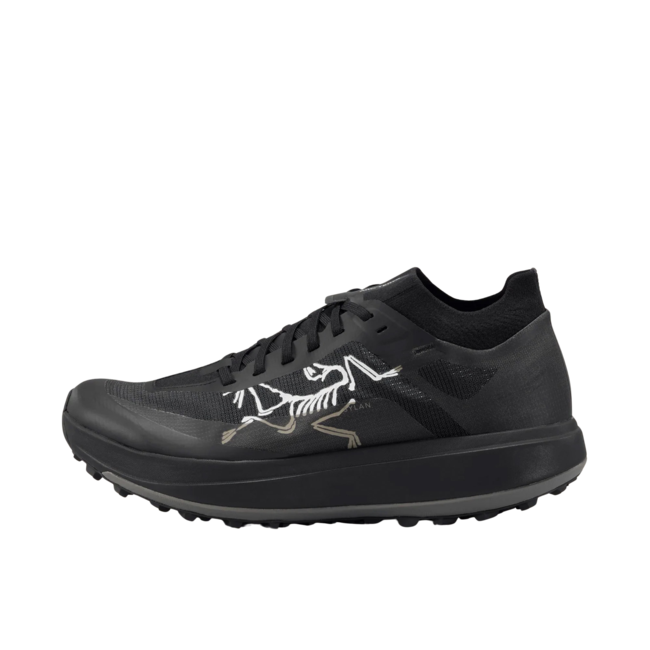
The Sylan Pro, which we carry here at Land & Sea, is where things get considerably more aggressive. This is designed for running fast through proper mountain terrain.
You get a pronounced rocker geometry underneath the foot, Arc'teryx's InFuse midsole combining EVA and polyolefin for rebound and shock absorption, a highly technical Matryx Micro upper, and underneath it all, Vibram Megagrip with LITEBASE technology and chunky 6mm lugs.
This isn't really the shoe I'd recommend to someone running laps around a groomed gravel path. Put it somewhere steep, wet and technical and suddenly it starts making considerably more sense.
if you already love Arc'teryx and you're looking for something capable of moving quickly through genuinely technical mountain terrain, the Sylan Pro is the shoe I would be looking at.
Where Arc'teryx gets interesting
What I think Arc'teryx brings to this category is slightly different to everyone else in this guide. They aren't trying to out-HOKA HOKA. They don't have decades of trail footwear heritage like Salomon.
And they're certainly not trying to build an enormous catalogue covering every conceivable type of runner. They seem much more interested in solving very specific mountain problems.
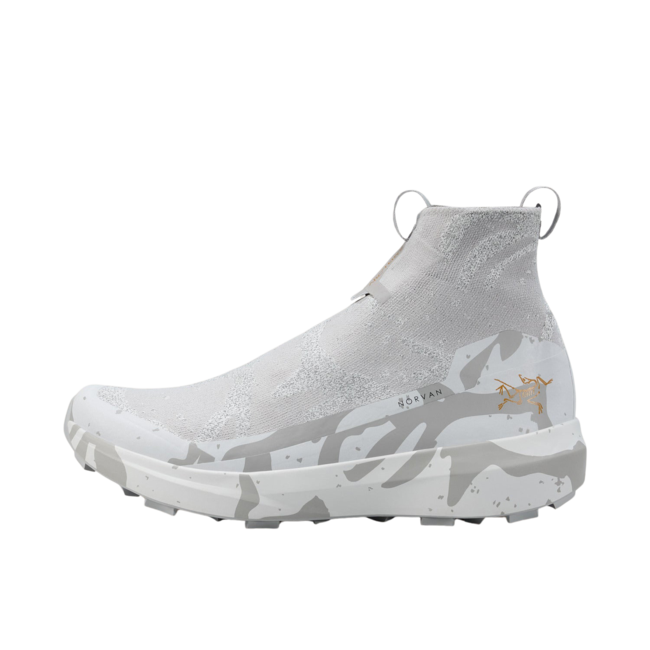
The Norvan LD 4 is built for long-distance trail running. The Sylan Pro is designed for moving quickly through technical terrain. The Vertex range starts blurring the boundaries between trail running and climbing. They even have the Norvan Nivalis, which takes the concept into winter with GORE-TEX protection, an integrated gaiter and 6mm lugs for snow and mud.
That feels authentic to Arc'teryx. The mountain comes first. The category comes second.
And considering what this brand has already managed to do with technical outerwear, packs and climbing equipment, I think the wider running industry should probably pay attention to what happens next.
Arc'teryx might not be one of the biggest trail running footwear brands today.
But I would be very surprised if they aren't considerably more important to this conversation five years from now.
On Trail Running Shoes
Is On the hottest footwear brand in the world right now? Only this morning I saw that On had signed a new deal with French football sensation Kylian Mbappe. The deal highlights their desire to push into more markets and become a genuine powerhouse in the footwear and active lifestyle space. Mbappe isn't simply another ambassador either. His signing coincides with On officially entering football, with Thierry Henry joining as Director of Football and the brand already working towards its first football footwear. It feels like another pretty significant statement from a company that, not that long ago, was considered a challenger running brand.
Now, specifically speaking to trail running shoes from On, I have personally been testing their range thoroughly over the past few months. There's a bit to unpack in terms of their performance, and I'll do my best to do that for you.
Before we jump into the product, what I absolutely love about On Running is that it feels like we are caught up in the middle of a challenger-brand story, and I am really enjoying how it's all unfolding. On has only been producing performance footwear since 2010, which is crazy when you consider the size and influence of the brand just 16 years later in 2026. In fact, I think I'm right in saying On is now Land & Sea's largest and fastest-growing footwear brand.
What is also important when talking about On in the context of trail running is understanding where the brand came from. This wasn't a fashion business that suddenly decided trail running was cool. On was born in Switzerland out of running. Co-founder Olivier Bernhard was a professional endurance athlete who became obsessed with creating a different feeling underfoot, experimenting with early cushioning concepts that eventually evolved into CloudTec. The company was quite literally born around the idea of rethinking the running shoe.
And when your backyard is the Swiss Alps, there is a pretty natural connection between running and the mountains.
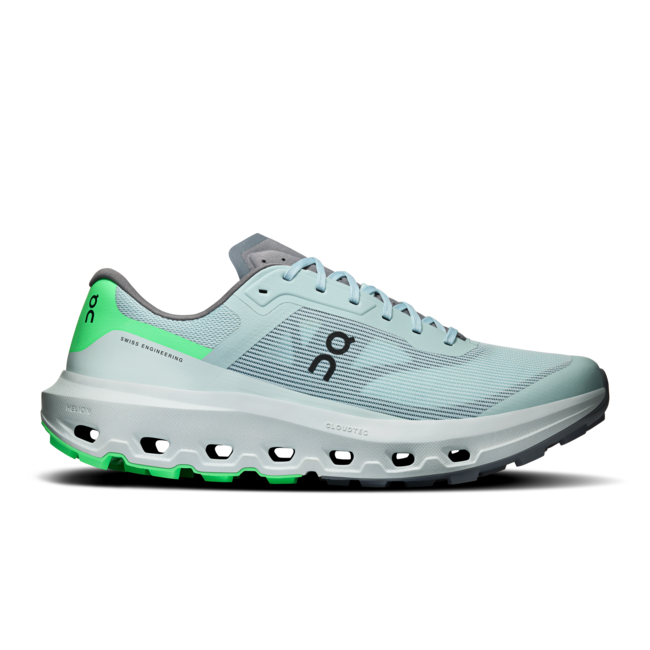
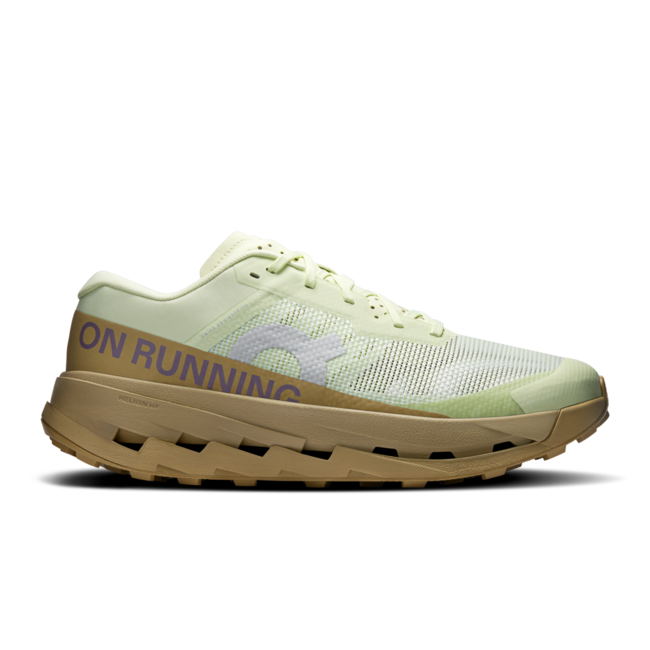
That heritage is now starting to show through much more aggressively in their trail collection. On has taken the technologies that made the brand famous and adapted them specifically for uneven terrain. You have CloudTec and its various evolutions controlling cushioning and transition, Helion foams providing lightweight energy return, the Speedboard adding structure and propulsion, and importantly Missiongrip, their dedicated outsole technology designed specifically around traction and control on trail surfaces. On themselves now position Missiongrip, Speedboard and CloudTec Connect as core technologies within their trail programme.
What I find particularly interesting is how quickly the range is becoming more serious. Products like the Cloudultra and Cloudultra Pro are a very clear signal that On doesn't simply want to make a trail version of its road shoes. They want credibility with proper trail runners, ultra runners and athletes who are actually spending long days in the mountains. At the same time, they are building out trail-specific shorts, tops, jackets, vests and accessories around the footwear. That tells me they are thinking much bigger than individual shoe models. They are building an entire trail ecosystem.
Then you have LightSpray, which for me might be one of the most fascinating footwear technologies in the market right now. On has developed a robotic manufacturing process that effectively sprays the upper directly onto the shoe using a continuous filament. At this point LightSpray is predominantly being used within On's fastest road-racing footwear rather than its trail collection, so I don't want to blur those two things together. But it gives you an insight into how differently this company is thinking about footwear manufacturing. On is already taking that technology into football, and I would be amazed if some of what they learn doesn't eventually influence how their future trail products are constructed as well.
That is probably the part of On that excites me most. They don't feel finished. They feel like they are still experimenting.
For a brand that is only 16 years old, On now has serious positions in road running, trail running, tennis, lifestyle and soon football. Trail, in my opinion, fits particularly naturally into that story. They have the Swiss mountain heritage, the technology, an increasingly complete apparel range and, most importantly, the confidence to approach product development differently.
So while I'm going to judge the individual shoes purely on how they perform on the trail, I think it is worth understanding the wider context. On isn't dipping its toe into trail running.
It looks increasingly like they intend to become one of the brands that defines where the category goes next.
Norda Trail Running Shoes
When it comes to outdoor brands, we often think about the likes of Arc'teryx, Norrona, Peak Performance, YETI and the like. Brands that have managed to take highly technical product, obsess over the details and somehow create something that feels desirable well beyond the simple function it was designed to perform.
But in my experience, I have never seen a brand enter the footwear space with such unapologetic intent to lift the market into a space it simply hadn't been before. Like many of you, when I first struck Norda, I wondered how big the market could possibly be for a $500 trail running shoe. Seriously. $500.
But when you slowly unpack the product, understand what has actually gone into making it and then understand the people and philosophy behind the brand, it starts making a lot more sense. In fact, I'll go one step further. For what you are actually buying, I think the $500 price tag is more than reasonable.
Norda was founded by husband-and-wife runners Willa and Nick Martire in Canada. They had spent years working around the footwear industry, travelling, running and talking about what their perfect trail shoe would look like. Eventually the conversation became an obsession. In 2020 they started building it. Their mission wasn't to create another shoe to fill a gap in a range. It was to create what they believed could be the ultimate technical trail running shoe, without making the usual compromises between weight, durability, performance and sustainability. Early prototypes were then punished on the trails between Montreal and the Eastern Townships in conditions ranging from roughly -35C through to +35C.
That origin story matters because Norda still feels like a company that started with the product and worked backwards.
There is no giant footwear catalogue here. No basketball division. No tennis range. No lifestyle heritage being reappropriated into trail. They make trail shoes. And they are ridiculously obsessive about them.
Norda 001A
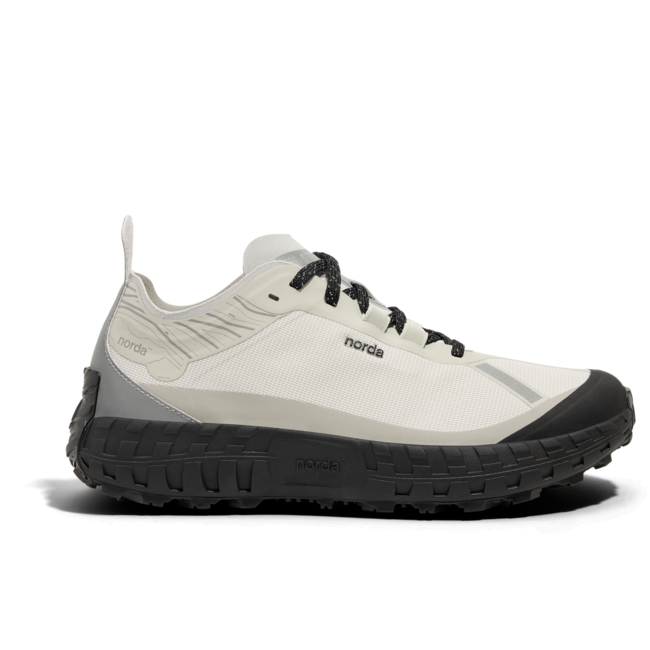
When I talk about the Norda 001, I am really talking about its current evolution, the 001A, which is the model we carry at Land & Sea. If you want to understand Norda, this is the shoe to start with.
The 001A is essentially their do-everything trail shoe. Daily training, long-distance trail running, ultras, gravel, wet bush tracks, rock, hiking and big days moving through mixed terrain. It isn't designed to occupy some tiny specialist niche. Norda has tried to build one shoe capable of handling an enormous amount of what real trail runners actually encounter.
And this is where you start to understand the price.
The upper is made from woven bio-circular Dyneema, an incredibly light and abrasion-resistant fibre that you simply don't see used across mainstream trail footwear to this extent. Instead of taking the traditional approach of layering mesh, overlays and reinforcement panels over each other, Norda has created a seamless upper that is designed to be light, secure and incredibly hard to destroy. Even the laces incorporate Dyneema.
Underneath that sits a proprietary Norda x Arnitel TPEE midsole. This is important because the 001A isn't trying to give you that super-soft, marshmallow sensation that has become fashionable across parts of the running industry. The ride is cushioned, but there is still structure and connection underneath you. For me, that makes much more sense once you leave manicured paths behind and start running over roots, rocks and broken ground.
You then have a custom eTPU insole adding another layer of energy absorption and return, before getting down to what is probably one of my favourite parts of the shoe: the outsole.
Norda worked with Vibram to create an exclusive Litebase and Megagrip soleplate with 5mm lugs. Vibram Megagrip has built a reputation for a reason. Wet rock, hardpack, gravel, loose terrain and changing surfaces are exactly where you want confidence underneath you, and the 001A has plenty of it.
Despite everything packed into it, the men's 001A comes in at approximately 268 grams in a US 8.5, with a 5mm drop and a relatively moderate 26mm heel / 21mm forefoot stack. Those numbers tell you quite a lot about the philosophy of this shoe.
This is not a gigantic stack of foam designed to disconnect you from the ground. Nor is it some stripped-back racing slipper that becomes uncomfortable two hours into a run. It sits somewhere beautifully in the middle.
Protective enough to go seriously long. Light enough to run properly. Low enough to feel stable. Tough enough that you don't feel the need to baby it. And perhaps most importantly, it feels like a trail shoe.
That sounds stupid until you run enough different footwear. There are plenty of brilliant modern shoes that feel like road-running platforms with an aggressive outsole attached. The Norda feels like every component was considered around what happens when the terrain becomes unpredictable.
So is a $500 trail shoe actually worth it?
This is where I probably differ from some people. If you run trails twice a year, absolutely not. If your only consideration when buying footwear is finding the lowest possible dollar-per-pair, Norda probably isn't speaking to you either. But premium doesn't automatically mean overpriced.
We happily accept that a technical Arc'teryx shell can cost significantly more than a generic rain jacket because of its construction, materials, design and expected performance. We understand why high-end skis, mountain bikes, tents and fishing reels cost what they do.
For some reason footwear has historically had a ceiling that consumers aren't supposed to question. Norda has basically ignored it.
They have taken some of the best materials available to them, put them into a shoe designed specifically for trail runners, and then charged what they believe that product costs rather than engineering the shoe backwards to hit a conventional retail price. I respect that.
There is also a sustainability argument here that I think is much more interesting than simply sticking some recycled material into a shoe and putting a green swing tag on it. Norda's philosophy is essentially that durability itself is sustainability. Make something properly. Make people want to keep it. Make it capable of taking punishment. Then remove some of the disposability that has become normal within performance footwear. That resonates with me.
The Norda 001A isn't perfect, and it certainly isn't for everyone. Fit is important too. Norda runs small, and I would strongly recommend actually measuring your foot and following the sizing guidance rather than blindly ordering your normal running-shoe size. But as an overall product? It is bloody impressive.
I would actually argue that Norda has done more than build a premium trail running shoe. They have demonstrated that there is room above the traditional ceiling of performance footwear for something genuinely more considered.
And perhaps that is why I like the brand so much. They didn't enter trail running asking what consumers were currently prepared to pay. They entered asking how good they could make the shoe. There is a very big difference.
The best trail running shoes of 2026
I've thought long and hard about how to present this section of our buying guide to you. Rather than simply stating in my opinion what shoe you should buy this year, we need to consider what the best trail shoe is for a variety of uses. Let's be real now, not all of us are running the same tracks day in day out. I have broken the answer out into each of the following to ensure you are best positioned to choose the very best trail shoe that will suit you.
Frequently Asked Questions on Trail Running Shoes
When in store at Land & Sea we often get asked many questions, basic & technical. While I've got you here & before you add to cart on your new trail running shoes, I thought I would share a few common questions with you.
What are the best trail running shoes in NZ?
What is the difference between trail running shoes and road shoes?
Can I use trail running shoes for hiking?
How long do trail running shoes last?
Should trail running shoes be waterproof?
How much room should trail running shoes have?
What heel drop is best for trail running?
Are HOKA good for trail running?
Is Salomon good for trail running?
Are expensive trail running shoes worth it?
What trail running shoes are best for mud?
What trail running shoes are best for wide feet?
I think that's probably enough from me today. As you can see, this is a category that I am incredibly passionate about. I have trained for years on the road, trail & elsewhere. I would hate to know how many pairs of shoes I have been through over the years. I've never compromised on the right equipment & I'm passionate about pairing people with what's right for them. Keep an eye out for plenty more articles like this as our team here at Land & Sea not only builds your home for information but also your home to browse & purchase the best outdoor products in the world.