

Trail Running Shoes vs Hiking Shoes vs Hiking Boots
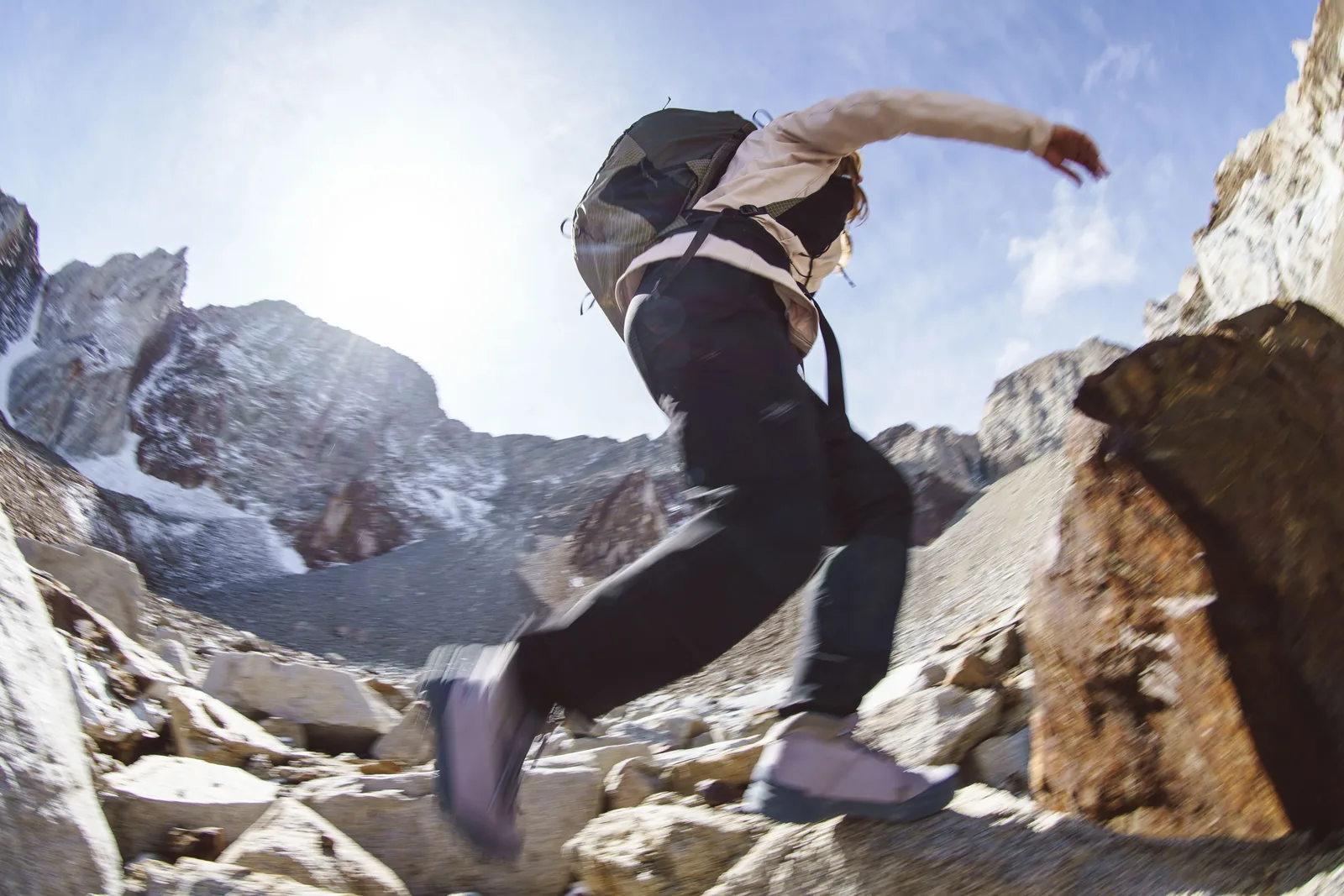
Trail Running Shoes vs Hiking Shoes vs Hiking Boots: What's Best for NZ?
I'll get something out of the way early. I'm not a fully-fledged hiker. Now I've done a fair bit, but I come at this space from a slightly different angle, which in my opinion is a good thing considering the big changes happening in footwear.
I love being outdoors, I have spent most of my life around outdoor product and I would hate to know how many kilometres I have covered on my feet over the years, but I'm not going to sit here and pretend I spend every second weekend disappearing into the backcountry with a 20kg pack strapped to my back.
I'm a runner. And because of that, I have probably been guilty of doing exactly what plenty of other runners do when faced with a hike. Grab a decent pair of trail running shoes and think, these will do. And, to be fair, most of the time they bloody well do.
Modern trail running shoes are now incredibly capable. They're light, comfortable, grippy, cushioned and, depending on what you buy, tough enough to take an absolute hiding. For a day moving quickly through relatively established terrain, I will still reach for a trail running shoe more often than not. But there comes a point where they don't cut the mustard & that's what I'm keen to discuss with you in detail today.
I've had days where a trail shoe that felt brilliant while running simply didn't feel like enough once I was walking for hours, spending more time on rough ground or asking my footwear to carry more than just me. At some point you realise that grip and cushioning aren't the only things that matter.
Structure matters. Protection matters. Durability matters. What you're carrying matters. And, perhaps most importantly, what you're actually doing matters.
That is where this discussion gets interesting because the lines between trail running shoes, hiking shoes and hiking boots have become incredibly blurred.
Twenty years ago the decision was considerably easier. You ran in running shoes and you hiked in boots. Today we have trail running shoes built with technical mountain outsoles, hiking shoes that feel suspiciously close to running shoes and hiking boots that weigh far less and flex considerably better than the old leather tanks many of us grew up with.
So, what should you actually wear? Let's unpack it properly while wiping the dust off a category that has been historically brown & boring.
Trail Running Shoes vs Hiking Shoes vs Hiking Boots: The Quick Comparison
Before we get too carried away with technology, membranes, chassis systems, lug depths and whatever other terminology the footwear industry has decided to throw at us this season, it helps to understand what each category is fundamentally trying to achieve.
| Trail Running Shoes | Hiking Shoes | Hiking Boots | |
|---|---|---|---|
| Primary purpose | Running efficiently over uneven terrain | Walking comfortably over varied terrain | Protection, structure & support over demanding terrain |
| Weight | Generally the lightest | Middle ground | Generally the heaviest |
| Cushioning | Often highest & most responsive | Balanced for walking | Usually firmer & more structured |
| Flexibility | High | Moderate | Generally lower |
| Ground feel | Moderate to high depending on stack | Moderate | Lower |
| Underfoot protection | Varies considerably | Higher | Generally highest |
| Upper protection | Lightweight | More protective | Most protective |
| Ankle coverage | Low | Usually low | Mid or high |
| Breathability | Generally excellent | Good | Generally lower |
| Drying speed | Usually fastest | Middle ground | Usually slowest |
| Waterproof options | Available | Very common | Extremely common |
| Durability | Good, but built around performance | Very good | Generally strongest |
| Heavy packs | Not their sweet spot | Capable with moderate loads | Strongest choice |
| Fast hiking | Excellent | Excellent | Can feel excessive |
| Running | Obviously | Not really | Please don't |
| Long day hikes | Excellent in the right conditions | Probably the sweet spot | Excellent where more protection is required |
| Multi-day tramping | Possible for experienced lightweight users | Very capable | Where boots begin earning their keep |
| Rough backcountry | Depends heavily on the shoe | Good | Strongest use case |
And with that, straight away you can probably see why this isn't as simple as saying one is better than the other.
There is a massive overlap. That overlap is also getting bigger every year as technology develops, new brands enter the trail shoe space & honestly, the market gets younger.
Why Are So Many People Hiking in Trail Running Shoes?
This is probably the most important place to start because I completely understand the appeal & have personally fallen into this trap. Probably a few years earlier than most.
Trail running footwear has become unbelievably good. In the trail running guide we recently put together, I talked a lot about how dramatically this category has progressed. Modern trail shoes have better rubber, stronger uppers, more stable platforms, better foams and far more underfoot protection than the trail shoes I was running around in years ago.
Take something like a HOKA Speedgoat, Salomon Genesis or Norda 001A. These aren't flimsy road shoes with a few bumps stuck underneath them.
They are proper technical products designed to deal with rock, mud, roots, gravel and broken ground. A shoe like the Norda 001A even combines a Dyneema upper with a custom Vibram Megagrip outsole and is deliberately positioned for both trail running and fast hiking.
So if I'm heading out for a reasonably fast day with a small pack, why would I automatically put a boot on? That is the question more and more outdoor consumers are asking us at Land & Sea. And it makes a lot of sense.
For me, the biggest appeal comes down to freedom. Trail running shoes feel light. They flex. They breathe. They allow you to move naturally and, because I come from a running background, they simply feel familiar to me.
If I spend four hours moving through relatively straightforward terrain, I would personally rather not carry unnecessary weight on my feet. But there is an important word in that sentence.
Unnecessary.
Because once the extra structure becomes necessary, the argument changes fairly quickly.
Where Trail Running Shoes Start to Reach Their Limit
This is where my perspective has changed over time. As a runner, my natural bias has always been towards lighter footwear. And I still think a lot of people overcomplicate hiking footwear. You absolutely do not need to put on an enormous boot every time you walk off the pavement.
But the mistake at the other end of the spectrum is assuming that because a trail running shoe has excellent grip, it is automatically the right tool for every outdoor mission.
It isn't. The biggest difference I notice is structure. When you're running, you are moving relatively quickly through the ground. Your foot contacts the surface, deals with the load and moves on.
Hiking can be different. You might spend eight hours walking. You might be carrying a pack. You might be sidling across uneven ground. You might spend kilometre after kilometre stepping onto rocks, roots and awkward surfaces rather than bouncing through them.
That changes what I want underneath my foot.
A proper hiking shoe typically gives you a firmer platform, more lateral stability, more protection around the toe and sides of the foot and a construction designed around prolonged walking rather than running. A boot takes that another step again.
And that is where I have personally had to accept that sometimes my beloved trail runners simply aren't the right answer.
So What Exactly Is a Hiking Shoe?
This is probably the most misunderstood category of the three. Everyone understands a trail running shoe. Everyone understands a hiking boot. Hiking shoes sit awkwardly in between and, in my opinion, that is actually their biggest strength.
From years of selling these products to every type of trail runner, walker & hiker, I tend to put it this way: A good hiking shoe essentially asks:
How much of the protection and stability of a hiking boot can we retain while removing the weight, height and bulk that some people simply don't need?
That makes a huge amount of sense to me.
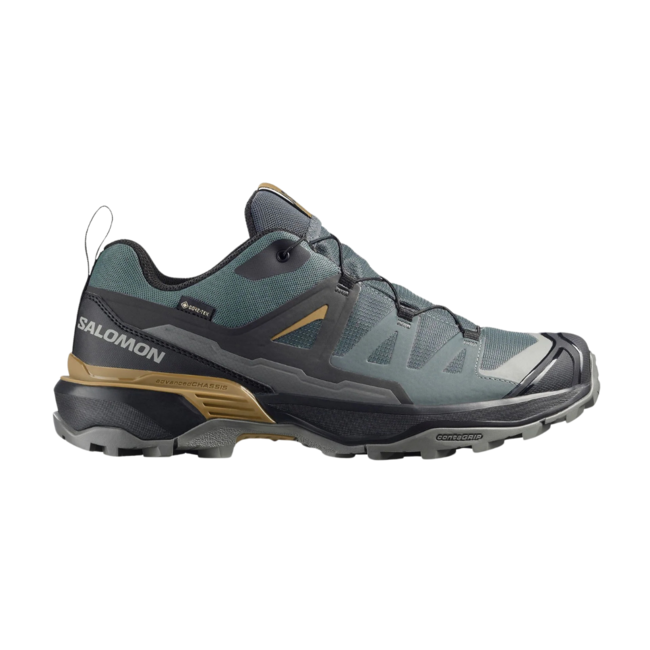
Something like the Salomon X Ultra is a good example. The current X Ultra 360 uses a dedicated chassis for lateral support, a protective toe and mudguard, Contagrip underneath and a more hiking-focused construction, but without automatically forcing you into a full mid-height boot.
Then you get products where the line becomes even harder to define.
The HOKA Mafate Hike is a hiking shoe built very deliberately with trail-running DNA. It uses HOKA-style cushioning, a Matryx upper and Vibram Megagrip with 5mm lugs, but packages it around hiking rather than outright running.
That is exactly where I think outdoor footwear is heading & it gets me super excited. Less obsession over what we call the shoe. More focus on what the product actually allows us to do. And, while focusing on that, we have introduced a little bit of design flair at the same time. Sorry, had to mention it.
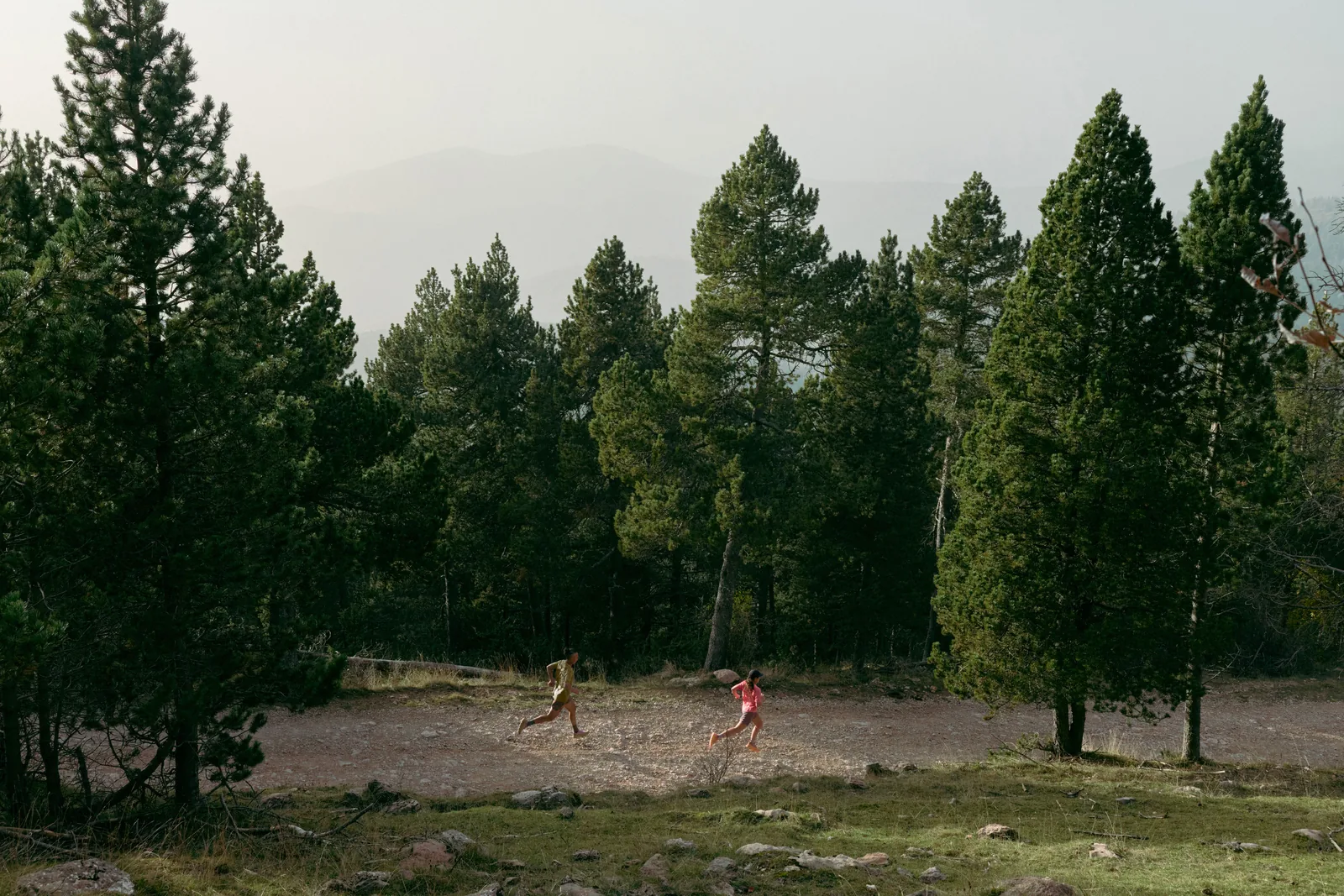
Trail Running Shoes vs Hiking Shoes: What's the Actual Difference?
This is where I believe the debate becomes more subtle because visually the two can now look remarkably similar.
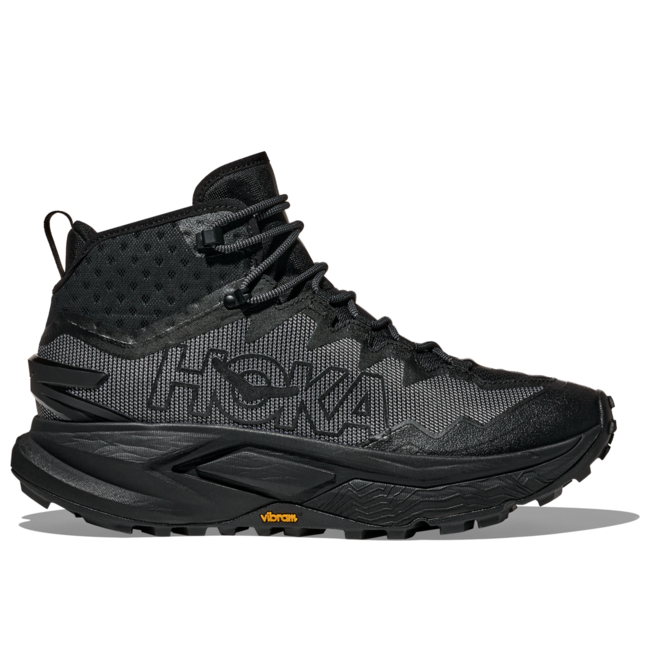
Put a modern technical trail runner beside a lightweight hiking shoe and plenty of our customers would struggle to tell you which is which. The difference is generally in what sits underneath and around your foot. So let's cover off a couple of key features that will help us determine the differences.
Cushioning
Trail running shoes generally prioritise cushioning around impact and forward movement. That doesn't necessarily mean they are softer, but the geometry of the shoe is designed around running.
Hiking shoes tend to prioritise sustained stability. Personally, this is one of the areas where I think trail runners can become deceptive. You put them on in the store and think: Man, these are comfortable.
And you are right, they are. But step-in softness and eight-hour stability are two different things. Sometimes you don't need more cushioning. You need more structure.
Flexibility
Trail running shoes need to move with you. There is nothing worse than being an hour into a long trail run, and your footwear is giving you nothing. That flexibility is one of the reasons I enjoy wearing them.
Hiking footwear will often resist movement a little more. I have found that initially that can feel less exciting, particularly to someone with a running background, but once terrain becomes rougher, or you put more weight on your back, that extra structure can become a good thing and you can feel it.
Upper Construction
Us trail runners are chasing a difficult balance. Light enough to run. Breathable enough to stay comfortable. Strong enough to avoid being shredded by rocks and roots. Hiking shoes can afford to add more material.
More reinforcement. More protection around the toe. More resistance to abrasion. Again, neither philosophy is better. They simply have different priorities.
Durability
This one matters big time & I have learnt this the hard way as a stubborn runner. A trail running shoe is ultimately a performance running product. Foams compress. Rubber wears. Uppers get punished.
Use one repeatedly for hiking and there is absolutely nothing wrong with that, but don't be surprised if you burn through it quicker than a purpose-built hiking shoe.
The lighter we make footwear, the harder manufacturers need to work to maintain durability. They are doing a great job, but there is always a trade-off somewhere. I'll give a special mention here to Norda, who incorporate their signature Dyneema upper for increased durability.
That is one reason I find products like Norda so interesting. They have essentially looked at this exact problem and asked whether better materials can reduce the traditional compromise between weight and longevity. Thanks to brands like Norda, this gap has closed even further.
Hiking Shoes vs Hiking Boots: Do You Really Need the Boot?
Now we get to the age-old argument & as a disclaimer, I come at this space with an eye on the future. Because hey, we ain't moving backwards in a world of AI advancements.
I reckon there are plenty of people walking around in hiking boots who probably don't need them. Sorry.
But there are also plenty of people walking into genuinely demanding terrain in lightweight footwear because somebody on the internet told them boots were old-fashioned. Which is not what I want you to think I'm saying either.
The answer comes back to what you're doing. If I'm heading out for a day on a well-established track, carrying little more than food, water and a jacket, I personally struggle to see the appeal of putting significantly more footwear on my feet than I require.
If I'm carrying a substantial pack through rough terrain over multiple days, I understand the boot immediately.
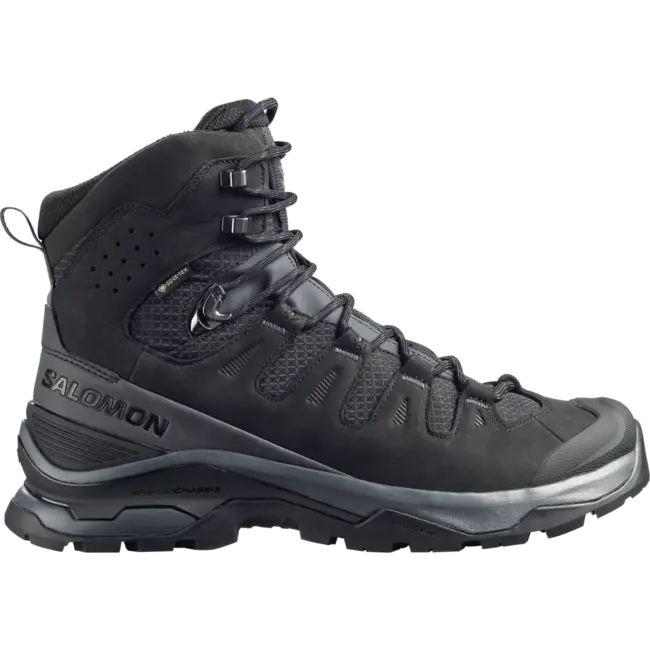
Products like Salomon's Quest exist for exactly this reason & it remains one of our best sellers. The Quest 5 GTX is specifically built around multi-day hiking, adding a more structured chassis, waterproof protection and a more substantial upper around the foot.
That's not unnecessary weight. That's a product doing a different job.
What About Ankle Support?
This is one I think we need to be careful with because things have changed. Just think about it. Ten years ago you broke your leg and you were put in a cast halfway to your hip and told to stay off it for weeks. Nowadays, it can be a moon boot and walk on. Not quite, but you get the point.
The traditional argument is: Hiking boots support your ankles. Trail running shoes don't, but that is a bit too simplistic for me.
Simply putting some material around your ankle doesn't magically turn a shoe into an ankle brace. When I think about support, I'm looking at the entire system.
How stable is the platform? How securely is my heel held? How much does the shoe move laterally? How stiff is the sole? How protected is my foot? How tired am I likely to become? What sort of ground am I moving over?
There are hiking shoes that feel considerably more stable underneath me than soft, high-stack boots. There are also proper boots that give me far more confidence once I'm carrying weight over broken ground than any trail shoe possibly could.
So I wouldn't buy a hiking boot purely because it comes higher up your ankle. I would buy one because the complete structure of that boot makes sense for what you're doing.
The New Zealand Problem: Our Trails Are Mixed at best
This is where generic international footwear advice becomes a little less useful. New Zealand has an amazing ability to throw completely different surfaces at you within a very short distance.
You can start on gravel. Disappear into bush. Find wet roots. Hit clay. Walk over rock. Cross a stream. Climb out through mud. Then somehow end up back on a perfectly formed track again. Typical NZ. We have the most stunning & diverse country in the world.
I talked about exactly the same problem when selecting the best trail running shoes for wet NZ conditions because grip here often needs to perform across several completely different surfaces in a single outing.
That's why I find blanket statements about footwear frustrating. "Trail runners are better." "Hiking boots are better."
Better for what?
If I am moving quickly through the Redwoods in Rotorua, I know exactly what I'm reaching for. My trail shoes.
If I'm walking a formed track for half a day with a small bag, I could happily wear a trail running shoe or hiking shoe.
If I'm heading into rougher terrain for several days carrying everything on my back, suddenly the extra structure and protection of dedicated hiking footwear becomes considerably more attractive. Context wins every time & that's why my first question to all my customers is: Can you tell me what trails you are hitting & what gear you are planning on taking with you?
Does Your Pack Change What You Should Wear?
Absolutely 100%. This might be the easiest variable to overlook, and as NZ's biggest specialist pack retailer, we encounter this all the time.
Put a hydration vest on me and my footwear only really needs to deal with me. Put a proper multi-day pack on my back and you have fundamentally changed the equation.
There is more total load travelling through the foot. You become more reliant on stability. Your movements become slower and more deliberate. Your feet spend longer underneath that weight.
This is where a shoe that felt perfectly adequate during a light day mission can begin feeling less convincing. I wouldn't create some arbitrary rule saying:
At exactly 10kg you need this shoe. Bodies are different. Experience is different. Terrain is different. But directionally the rule is easy enough to understand.
As the load goes up, my desire for structure goes up with it.
Waterproof Trail Shoes vs Waterproof Hiking Shoes
Ah yes, GORE-TEX. Another category where everybody seems to have an incredibly strong opinion, and I understand why.
I think waterproof footwear is brilliant when you actually need waterproof footwear. Revolutionary stuff, I know. If I'm walking through wet grass, shallow mud and consistently damp conditions, keeping that moisture out of my socks sounds pretty good to me.
If I'm moving quickly in warm conditions and crossing water deep enough that it is eventually going over the top of my shoe anyway, suddenly breathability and drainage become far more important.
Because waterproofing works both ways. It's designed to keep water out. Once you've filled the shoe from above, getting that water back out is another conversation.
So again, don't buy GORE-TEX because you associate waterproof with premium. Buy it because it solves the problem you actually have.
For New Zealand winter, wet tracks and colder conditions, waterproof hiking footwear can be fantastic. For warm-weather fast hiking with regular river crossings, I can make a very strong argument for going the other direction.
When I Would Choose a Trail Running Shoe
This is still my natural home & the answer can be as simple as: If I'm running. Moving quickly. Doing a shorter day mission. Carrying very little. On relatively formed terrain. Mixing road, gravel and trail. Fast hiking. Or simply prioritising lightness and freedom of movement. Give me the trail runner.
And the beauty of the category now is that we can choose exactly how much shoe we want. Want maximum grip and cushioning? There are options. Want lower stack and precision? There are options. Want something ridiculously durable? There are options. Want waterproof? Yep. Want wide fit? Yep.
The modern trail running category is enormous & only expanding. Can I also throw in something a little cheeky? Trail running shoes just look better too!
When I Would Choose a Hiking Shoe
This might be the category I think deserves more attention. Because for plenty of people, the hiking shoe is probably the answer.
You don't necessarily need the weight and coverage of a boot. But you're also not running. You're walking for hours. Potentially carrying a pack. You want grip. You want stability. You want more protection. And you want something that is still relatively light and easy to wear.
That's exactly the gap a hiking shoe fills. If someone came into Land & Sea and said:
"I do day hikes, some easier overnight missions, travel a lot, walk quickly and don't particularly like boots." I'd be spending a lot of time in this category.
When I Would Choose a Hiking Boot
This is where I stop being the runner trying to wear trail shoes everywhere and accept that the product exists for good reason.
I want a hiking boot when the consequence of not having enough footwear becomes higher. Long trips. Heavy loads. Rough ground. Cold. Persistent wet. Sharp rock. Scree. More remote environments.
Situations where protecting the foot and creating a predictable platform matters more to me than shaving some weight. That does not make hiking boots old technology. It makes them specialised equipment.
And when you're doing the thing they're specialised for, they're very difficult to replace.
So Which Is Best for You?
This is probably the simplest way I can break it down in an attempt to remove all the complexity & variables.
| If this sounds like you... | I would start with... |
|---|---|
| You primarily run trails | Trail running shoe |
| You want one shoe for road, gravel & light trail | Trail running shoe |
| You fast hike with a small pack | Trail running shoe / light hiking shoe |
| You do regular day hikes | Hiking shoe |
| You want more protection but hate boots | Hiking shoe |
| You hike in wet NZ conditions regularly | Waterproof hiking shoe / boot |
| You do overnight trips with moderate loads | Hiking shoe / light boot |
| You carry heavier packs | Hiking boot |
| You regularly tackle rough, technical terrain | Hiking boot |
| You want maximum protection & durability | Hiking boot |
| You have no idea | Come and try them on |
That final point probably sounds like a cop-out, but footwear is one category where I genuinely think trying things on still matters.
Your foot shape gets the final vote.
Always.
Can You Use Trail Running Shoes for Hiking?
Absolutely. I do. Plenty of our team do. And plenty of very experienced outdoor users do.
The better question is:
Should you use trail running shoes for the hiking you're about to do?
That answer changes.
For fast hiking, formed trails, lighter loads and shorter missions, trail running shoes can be exceptional.
For serious backcountry use, heavy packs and rough terrain, there comes a point where the weight you saved on your feet becomes considerably less important than having enough protection and structure underneath you.
I've probably spent a lot of my life on the trail-running side of that line. What experience has taught me is that the line still exists.
The Hiking Footwear Brands Worth Knowing
One part of this discussion that I don't want to skip over is brands. And I'll acknowledge my bias early.
I come from a running background and spend a huge amount of my life looking at product from brands like Adidas, Nike, ASICS, New Balance, Salomon, HOKA & On. Naturally, I'm drawn towards the more modern end of the hiking market. Lightweight materials. Technical foams. Trail-running-inspired geometry. Shoes that look like they might actually encourage me to move rather than something I need to spend three months breaking in.
But if we are going to have a proper conversation about hiking footwear, we also need to acknowledge the other side of the market. The brown shoe guys.
LOWA. Meindl. Scarpa. Zamberlan. Hanwag. Merrell.
Brands that were making serious walking and mountain footwear long before trail running became fashionable, and brands that still build some of the best products in the world when the brief is durability, structure, heavy loads & long days in rough terrain.
What I find particularly interesting in 2026 is that these two worlds are starting to collide. Running brands are building more hiking shoes. Traditional hiking brands are making lighter, faster footwear. And the big winner from all of that is us.
Salomon
If there is one brand that perfectly sits between trail running and traditional hiking, it is probably Salomon.
We talked about Salomon extensively in our trail-running guide because their history within mountain running is undeniable. But what makes them particularly relevant here is that they have been taking trail-running technology and deliberately applying it to hiking for years.
The X Ultra is probably the best example. Salomon themselves describe the concept as "inspired by trail running, made for hiking". The range combines a more agile feel with the chassis, protection and stability you expect from dedicated hiking footwear. At the other end you have the Quest, which is a completely different animal and moves much further towards proper backpacking and multi-day use.
That range tells the whole story. You can wear a Genesis if you want to move really light and fast. Step into an X Ultra when you want more hiking-specific stability.
Then move all the way into a Quest when the pack gets heavy and the terrain starts demanding more from the shoe. To me, Salomon understands the crossover better than almost anyone. Plus, the brand? Well, is there a hotter brand in the outdoors right now?
On
On is another fascinating one because this is a company most consumers still associate primarily with running, and fair enough; they are a baby in the footwear game. But, that is changing quickly.
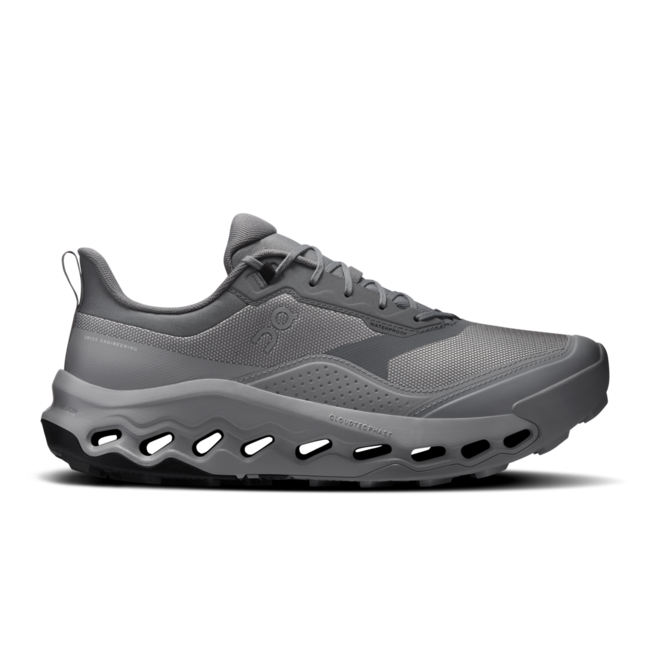
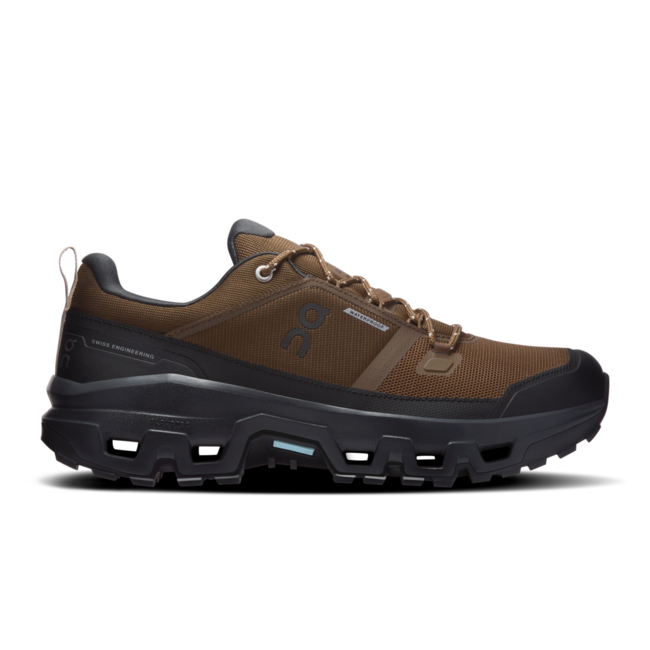
Their hiking range has become considerably more serious. The Cloudhorizon takes the comfort philosophy that made On successful and turns it into a highly cushioned hiking shoe, while the Cloudrock goes further again with low and mid-height waterproof options, Missiongrip traction and a more supportive platform designed for mixed terrain. We currently carry both sides of that hiking story at Land & Sea. And personally, this category makes perfect sense for On.
If I am coming from running footwear and don't want to suddenly put a stiff leather boot on my foot, something like a Cloudhorizon feels familiar. Soft. Light. Easy to walk in. Modern.
But importantly, it is actually designed for hiking rather than simply being a Cloudrunner with some aggressive rubber underneath it.
For day hiking and moderate terrain, I think this modern category of footwear is only going to get bigger.
Arc'teryx
Arc'teryx approaches hiking footwear exactly how I would expect Arc'teryx to approach it. Fairly seriously.
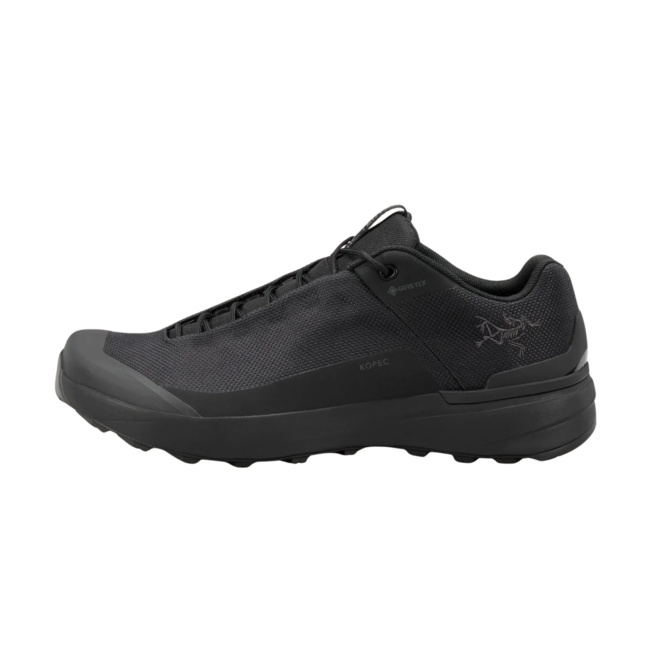
The Kopec is probably the best example within our current range at Land & Sea. You have both low and mid-height options using CORDURA, GORE-TEX, a dual-density midsole, a TPU shank and Vibram Megagrip underneath. The Mid still weighs only around 310 grams in the women's version we range, which is pretty impressive considering how much structure is being built into the shoe.
This is where the modern hiking boot becomes really interesting to me. It doesn't look like the hiking boot my grandfather wore. It doesn't feel like one either.
But underneath all of the modern materials, Arc'teryx has still thought about torsional support, toe protection, waterproofing, outsole grip and controlling the foot over rough ground.
That is the stuff that separates an actual hiking product from something that simply looks outdoorsy.
HOKA
HOKA almost inevitably had to end up in hiking. Their entire footwear philosophy is built around making movement over distance easier, and there is an obvious crossover between that and spending an entire day walking through the mountains.
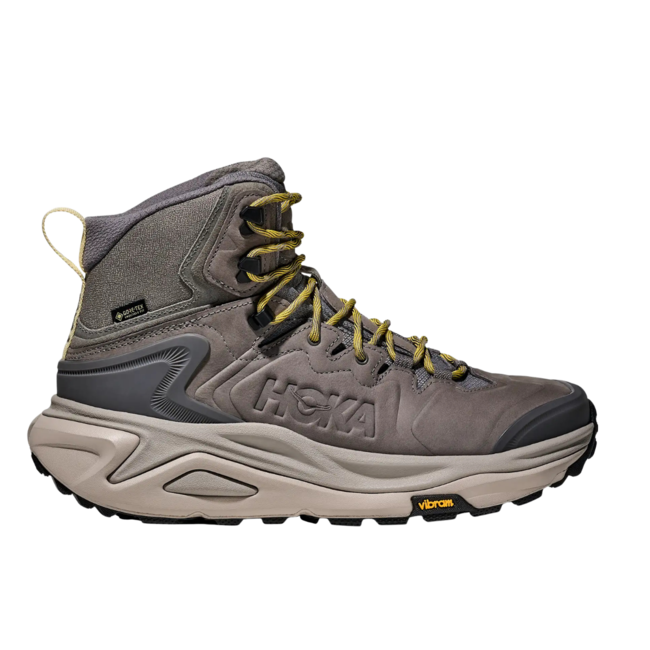
The Kaha is probably the clearest representation of where HOKA sits within hiking. The current Kaha 3 GTX is positioned for everything from day hiking through to multi-day adventures, using the sort of high-cushion philosophy we associate with HOKA while adding the structure and durability required for a proper hiking product.
Again, I completely understand the appeal. If you already love the feeling of a HOKA running shoe, there is something pretty attractive about retaining some of that cushioning when you start hiking.
It also demonstrates just how much the categories have blurred. Twenty years ago, a highly cushioned running company producing a serious hiking boot might have sounded strange.
Today it almost seems obvious.
Norda
Technically, Norda doesn't really belong in a hiking-brand section. And that is exactly why I want to include it. Norda builds trail running shoes.
But a product like the 001A is a perfect example of why so many people have started questioning whether they need a traditional hiking shoe at all.
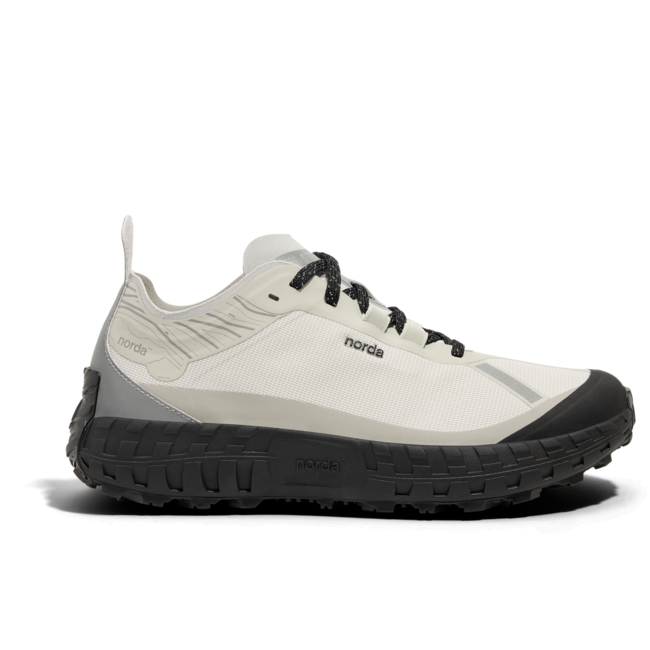
The Dyneema upper is incredibly durable, the Vibram Megagrip outsole gives you proper traction, the platform is relatively stable and there is enough protection underneath you to spend seriously long days on your feet. We already specifically recommend the 001A for fast hiking, hut approaches and lighter outdoor missions.
Would I take it into the backcountry with a massive pack for a week? Probably not. Would I happily spend a full day hiking in one? Absolutely.
That distinction is basically the entire reason this article exists.
Dolomite
Then we get to a brand that starts pulling us back towards the traditional side of hiking.
Dolomite is particularly interesting to us because we actually range it at Land & Sea, and the footwear looks and feels very different from something like an On Cloudhorizon or Norda 001A.
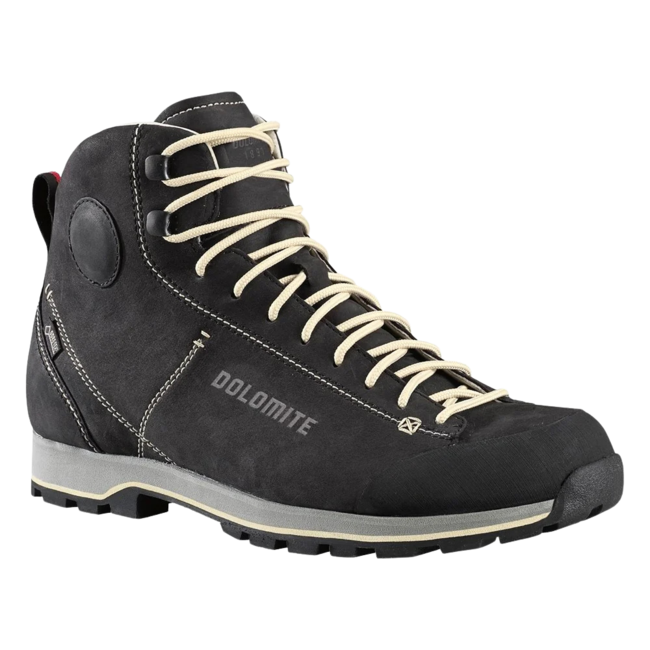
You have leather. More traditional hiking silhouettes. Products like the 54 High GTX, Crodarossa and Croda Nera.
There is a sense of mountain heritage in the product that I really like. Dolomite's current trekking collection stretches from traditional-looking 54 Hike footwear through to considerably more technical Crodarossa models, so even within one brand you can see the old and new worlds starting to meet.
If you walk into our store wanting a brown leather hiking boot because that is what a hiking boot looks like in your head, I get it.
There is something reassuring about it. And sometimes that more substantial construction is exactly what the job requires.
And Then There Are the Traditional Hiking Specialists
It would be pretty arrogant for me to write an article about hiking footwear and pretend the entire market revolves around the brands we range.
It doesn't. There is another group of brands that have spent decades obsessing over hiking, trekking and mountaineering footwear.
They might not be the brands I naturally reach for as a runner. They might not have the same cultural heat as HOKA, Salomon or On. And yes, quite a few of them make a very good brown shoe. But they know how to make boots.
LOWA
LOWA is probably one of the names I immediately associate with proper European hiking footwear.
Their Renegade is a perfect example of why. LOWA launched the original Renegade in 1997 and says the franchise has sold more than 12 million pairs. That is an extraordinary number for a hiking boot and tells you how well established that style of footwear still is.
What I find interesting is why the Renegade was originally developed. Even back then LOWA was trying to make the hiking boot lighter and more flexible.
So perhaps this move towards lighter hiking footwear isn't as new as those of us in the running world like to think.
Meindl
Meindl is another brand I would put firmly into the traditional hiking and trekking camp.
Leather. Craftsmanship. Structured boots. Proper trekking footwear.
Their current range still includes everything from lighter technical trekking models through to highly traditional leather boots, and they continue to put a huge emphasis on handcrafted construction and long-term durability.
This is probably the opposite end of the spectrum from me grabbing a trail runner and saying, she'll be right.
And sometimes the opposite end of the spectrum is exactly where you need to be.
Scarpa
Scarpa becomes particularly interesting because they are harder to pigeonhole.
They have serious traditional mountain and trekking credibility, but they are also aggressively developing lighter hiking shoes, approach footwear and faster-moving products.
Their current hiking range stretches from lightweight shoes such as the Ribelle Cross through to more structured products like the Rush and proper trekking boots designed around longer trips and loaded packs.
To me, Scarpa is another example of the traditional hiking world moving towards the runner.
Zamberlan & Hanwag
If you want the classic European hiking boot philosophy, Zamberlan and Hanwag deserve to be part of the conversation.
Zamberlan still produces beautiful Italian leather footwear designed around trekking, heavy loads and genuinely rough country. Their backpacking range openly focuses on off-trail use, rugged terrain and carrying weight.
Hanwag is similar in philosophy. Their range includes the Tatra, Yukon and Alaska, with leather construction, resolable models, different lasts and boots specifically designed around multi-day and long-distance trekking.
This stuff might not look revolutionary sitting beside a fluorescent trail shoe but it doesn't need to.
These products are solving a completely different problem.
Merrell
And finally, you cannot really talk about mainstream hiking footwear without mentioning Merrell.
The Moab has become one of those products that almost defines its category. Merrell now takes that traditional Moab platform and stretches it from the classic hiking shoe into lighter, faster products like the Moab Speed. Even Merrell, arguably one of the most recognisable traditional hiking brands in the world, is moving towards lighter and more athletic footwear.
And that tells me something. Side note on this brand as we closely watch from the sidelines. One of my favourite brands in the outdoor world is Snow Peak. Merrell and Snow Peak have recently pulled off some of the most inspiring collaborations in the outdoors, showcasing the health of Merrell as a brand in the outdoor space.
Two Different Philosophies Are Starting to Meet
The more I have looked into this category, the more I think we are watching two completely different schools of footwear design slowly move towards each other.
On one side you have:
Salomon. HOKA. On. Norda. Arc'teryx.
Brands asking:
How light, comfortable and agile can we make footwear without sacrificing the protection required for the mountains?
On the other you have:
LOWA. Meindl. Scarpa. Zamberlan. Hanwag. Merrell.
Brands that have traditionally asked:
How much protection, durability and stability does somebody need to spend days moving safely through difficult country? And increasingly, both groups are arriving somewhere in the middle.
Traditional boots are getting lighter. Running shoes are getting tougher. Hiking shoes are sitting smack bang between the two.
Personally, I think that is why the hiking shoe category is probably the most interesting of all right now.
The trail runner in me wants less shoe. The traditional hiking market keeps reminding me why sometimes I need more.
And somewhere between those two points is probably the right answer for most of us.
Frequently Asked Questions: Trail Runners vs Hiking Shoes & Boots
Can I use trail running shoes for hiking?
Are hiking shoes better than trail running shoes?
Do I need hiking boots in New Zealand?
Are trail running shoes good for Great Walks?
Are hiking boots better for your ankles?
Should hiking shoes be waterproof?
What's the difference between a hiking shoe and a hiking boot?
What is best for fast hiking?
My Take
If you had asked me years ago what I should wear for a hike, there is a very good chance I would have looked at whichever trail running shoes were sitting beside the door and thought, They'll do.
And plenty of the time I would still give you exactly the same answer. But I've become more deliberate about it these days.
The incredible development happening in trail running footwear means we can use these shoes for far more than simply running. Some of the products available today are capable of covering an enormous range of terrain and use.
That doesn't make the hiking shoe irrelevant. And it certainly doesn't kill the hiking boot. If anything, the opposite has happened.
As trail footwear has improved, every category has become more specialised. We now have the luxury of choosing the product that actually suits the job rather than wearing one giant leather boot for everything that happens beyond the pavement.
If I'm moving fast and light, trail shoes are still where my heart is. If I'm walking all day and want more protection without the bulk of a boot, hiking shoes make an enormous amount of sense. And if I'm carrying weight into rough country for multiple days?
That is probably the point where even I stop being stubborn and put my boots on.
Ultimately, I don't care what category is printed on the box. I care whether the product underneath my feet is right for where I'm going. And that's probably the most important thing to take away from this entire guide.